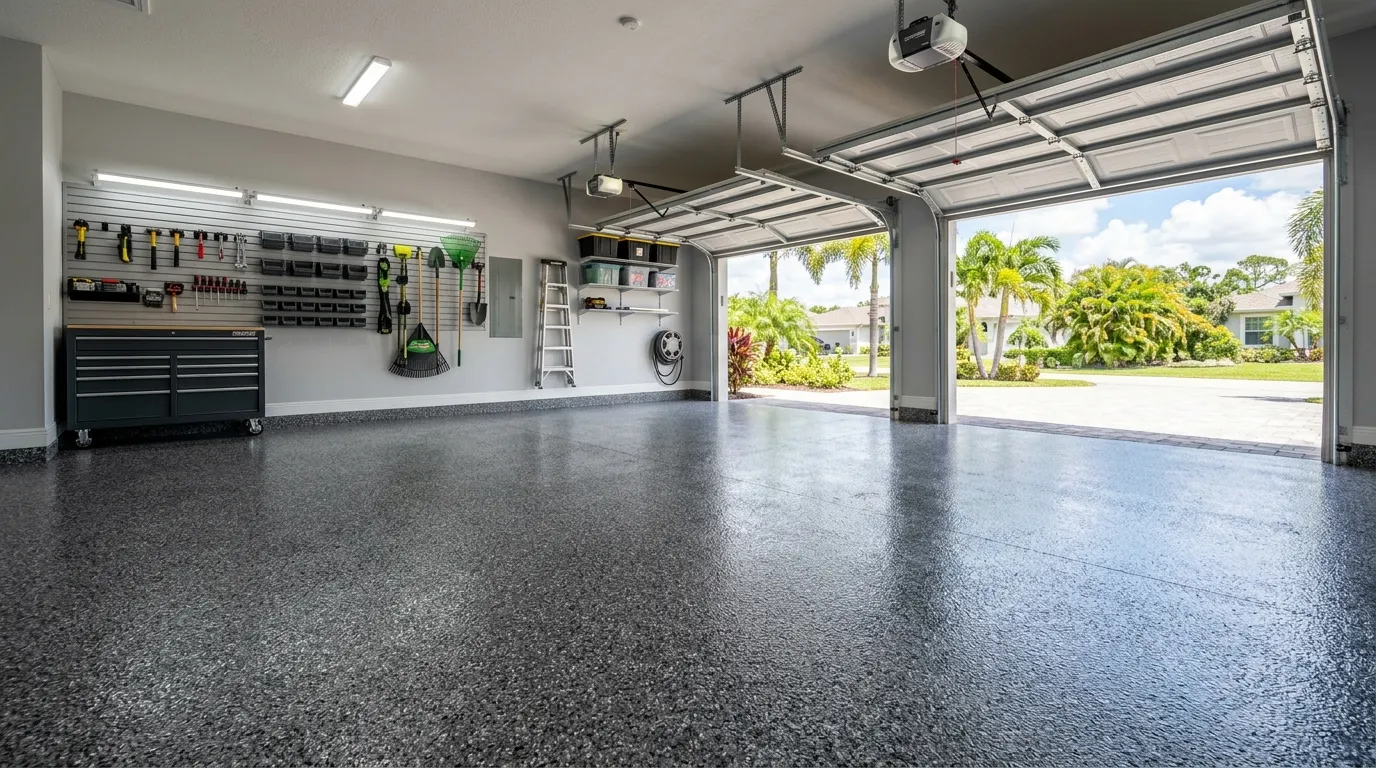
Coating comparison
Polyurea vs. Polyaspartic: What We Install and Why
Polyaspartic is a type of polyurea, but the two behave very differently on a floor. Here's how they compare, and why our crew installs polyaspartic and epoxy on garages, patios and commercial slabs across Southwest Florida.
Same family, different jobs
How polyurea and polyaspartic are related
Polyaspartic is a type of polyurea. Both form when an isocyanate reacts with an amine, which is why they share a reputation for toughness and chemical resistance.
The difference is in the resin. Polyaspartic uses aliphatic polyaspartic esters that react more slowly and resist UV. Traditional polyurea reacts in seconds and is built for spray rigs, which is why it shows up on truck beds and roofs more often than on finished garage floors.
| Property | Traditional polyurea | Polyaspartic (aliphatic polyurea) |
|---|---|---|
| Chemistry | An isocyanate reacting with an amine resin. Floor and liner products are often aromatic. | An aliphatic polyurea made with polyaspartic ester resins, which slow the reaction down. |
| Working time | Seconds to minutes, so it is usually sprayed with heated plural-component equipment. | Minutes, which leaves time to roll, squeegee and broadcast flake by hand. |
| Sunlight | Aromatic versions darken or yellow under UV unless they get an aliphatic topcoat. | Aliphatic, so it stays color-true under Florida sun. |
| Where you usually see it | Truck-bed liners, roof and waterproofing membranes, secondary containment. | Garage floor topcoats, patios, lanais, driveways and other sun-exposed concrete. |
What we install
Why our crew installs polyaspartic and epoxy
We install polyaspartic and epoxy systems, not full polyurea systems. Polyaspartic gives us the polyurea family's toughness with enough working time to lay down flake and color evenly by hand, and it holds its color in the sun. Epoxy covers interior floors where UV exposure isn't a concern. On the walkthrough, we match one of the two to your slab and how you use the space.
Polyaspartic
Installed in one day; ready for foot traffic the next day (about 24 hours). UV-stable, so it suits garages that get sun through the door, plus patios, lanais and driveways.
Explore polyaspartic coatingsEpoxy
Solid-color, flake and metallic finishes for interior slabs, usually installed in one to two days.
Explore epoxy coatingsRelated Floor Coating Systems

Ready to Transform Your Space?
Ready for a Floor You’ll Love?
Not sure whether polyaspartic or epoxy fits your floor? Book a free phone consultation to talk it through, or request a free on-site estimate and Mickey will walk the slab with you before we quote.