
Stained concrete floors pros and cons center on one tradeoff: unique, permanent color that typically lasts 20–30 years versus a finish that reveals every flaw in the underlying slab. Staining costs $3–$15 per square foot installed depending on design complexity. Epoxy Floors N More provides concrete staining across Southwest Florida and recommends it selectively based on slab condition.
Most homeowners researching stained concrete think the biggest risk is choosing the wrong color. Color is actually the easiest variable to control during application. The real concern is slab condition—stain penetrates into concrete rather than covering it, meaning every crack, patch, and old paint spot becomes part of the final look. What’s underneath determines whether staining enhances or exposes.
The Real Advantages of Stained Concrete

When the slab is in good condition, stained concrete delivers benefits that other flooring options can’t match.
One-of-a-Kind Aesthetics
Acid stains react chemically with minerals in the concrete, creating natural color variations and marbling effects unique to each slab. No two stained floors look identical. Water-based stains offer more predictable, uniform color but still create depth that paint or vinyl can’t replicate.
Longevity and Low Maintenance
Because the color penetrates into the concrete rather than sitting on top, stained floors typically don’t peel, chip, or flake. With proper concrete sealing every 3–5 years, a stained floor typically lasts 20–30 years. Daily maintenance requires nothing beyond sweeping and occasional damp mopping.
UV Resistance for Florida Conditions
Unlike epoxy coatings that can yellow under UV exposure, concrete stains don’t degrade in sunlight. This makes staining an excellent option for covered patios, lanais, and pool decks in Naples and Fort Myers where surfaces see partial sun daily.
Where Stained Concrete Falls Short

The same penetrating chemistry that makes stain durable also creates limitations that homeowners need to understand before committing.
Slab Imperfections Become Permanent Features
Stain doesn’t fill or hide cracks, patches, or surface damage. It often makes them more visible because damaged areas absorb stain differently than intact concrete. A patched section may reject stain entirely, leaving a lighter spot that draws the eye. If your slab has repairs from plumbing work or settling cracks, staining highlights rather than conceals those areas.
Limited Chemical Resistance
Stained concrete without a heavy-duty sealer absorbs oil, gasoline, and acidic liquids. For garages where automotive fluids are a daily reality, staining alone doesn’t provide adequate protection. A garage floor epoxy or polyaspartic coating system handles chemical exposure far more effectively than a stained-and-sealed surface.
Color Cannot Be Easily Changed
Acid stain creates a permanent chemical reaction with the concrete. Changing the color later requires grinding off the entire surface layer—essentially removing the top eighth-inch of concrete—before restaining. This adds $2–$4 per square foot in removal costs before new stain can even be applied.
How to Decide If Staining Is Right for Your Floor

The decision comes down to slab condition and intended use. Ask these questions about your specific floor:
- Is the slab free of major cracks, patches, and old coatings? If yes, staining will likely produce beautiful results.
- Will the floor face chemical spills (oil, cleaners, pool chemicals)? If yes, an epoxy coating system protects better than stain alone.
- Is the surface outdoors or in a covered lanai with UV exposure? Stain excels here because it won’t yellow or degrade in sunlight.
- Do you want a natural, earth-tone aesthetic with character? Stain delivers this better than any coating system.
For more detail on concrete staining costs and what factors affect your quote, understanding the pricing breakdown helps set realistic expectations before scheduling a consultation.
Frequently Asked Questions
Can you stain a concrete floor that was previously sealed or painted?
The existing sealer or paint must be completely removed first. Stain needs direct access to bare concrete pores to penetrate and react. Epoxy Floors N More grinds old coatings off during surface preparation, but heavily painted or epoxied floors may need mechanical scarification, adding prep time and cost.
How slippery are stained concrete floors when wet?
Stained concrete maintains the same slip resistance as unsealed concrete unless a high-gloss sealer is applied on top. For outdoor applications, a matte or satin sealer preserves traction while still protecting the color. Anti-slip additives can be mixed into any topcoat sealer for pool deck and patio areas.
What colors work best for stained concrete in Florida?
Earth tones (amber, walnut, cola) are the most popular in Southwest Florida because acid stain naturally produces warm, organic variations that complement Florida architecture. Cool tones (gray, blue-black) are possible with water-based stains but look less natural on concrete.
Weigh the Tradeoffs Before You Commit
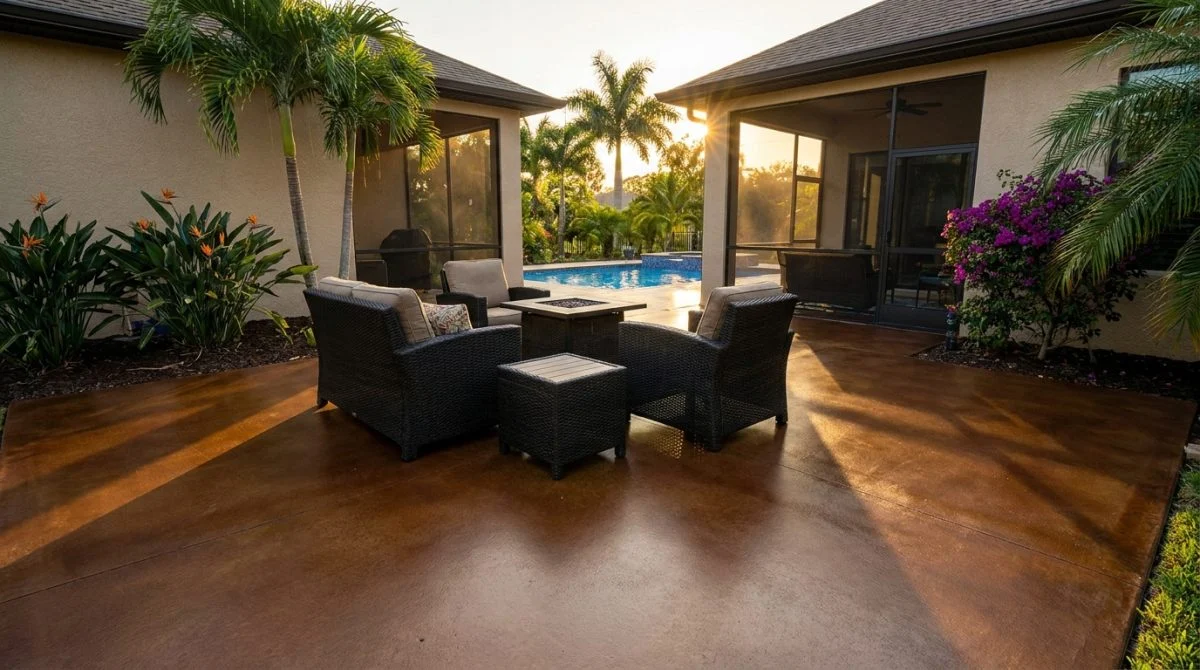
Stained concrete delivers permanent, UV-resistant beauty on slabs in good condition. It falls short on damaged floors, in chemical-exposure areas, and where you might want to change the look later. The deciding factor for most Southwest Florida homeowners is slab condition. A professional assessment of what’s underneath tells you whether staining will enhance your floor or highlight its problems.
Get a free assessment from Epoxy Floors N More at (239) 339-7238. A site visit determines whether staining, sealing, or a full coating system is the right fit for your concrete.
Written by
Timothy Gonzalez
Epoxy Floors N More shares practical guidance based on floor coating work across Southwest Florida.