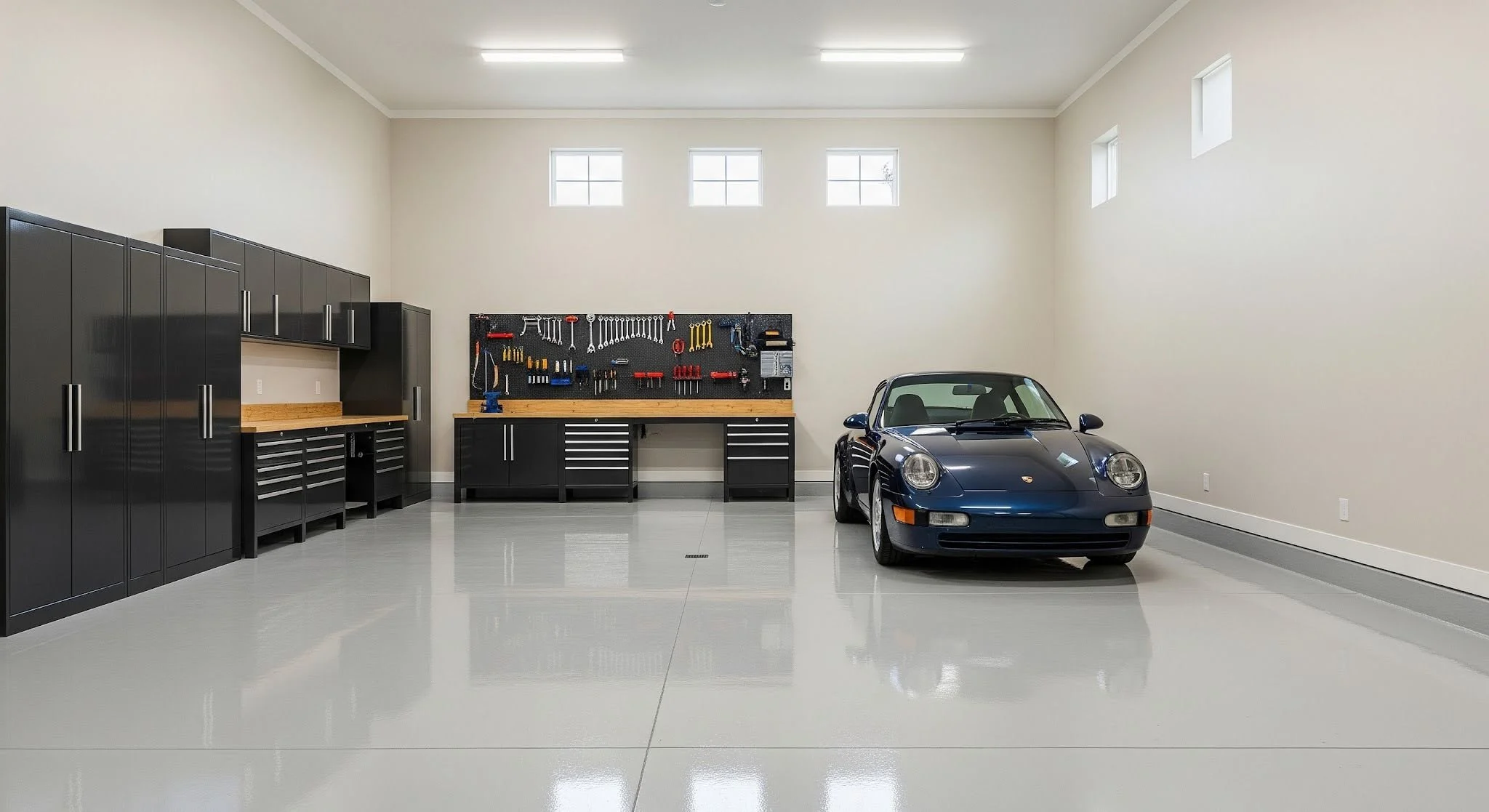
Polyaspartic vs epoxy for garage floors comes down to cure speed, heat resistance, UV stability, and long-term durability. Both are professional-grade systems that outperform paint and basic sealers. Epoxy Floors N More installs both polyaspartic and epoxy garage floor coatings across Fort Myers, Cape Coral, Naples, and Southwest Florida. Our recommendations are based on each garage’s specific conditions.
You pull into your garage after a July afternoon on I-75. The tires are hot. The concrete slab has been absorbing radiant heat through the roof all day. You park, the hot rubber presses against the coating, and you won’t think about it again until the next morning when you back out and notice the floor looks different under the tires. That’s where polyaspartic and epoxy diverge. One system shrugs off the heat. The other is visibly marked by it.
How Epoxy Performs in a Southwest Florida Garage
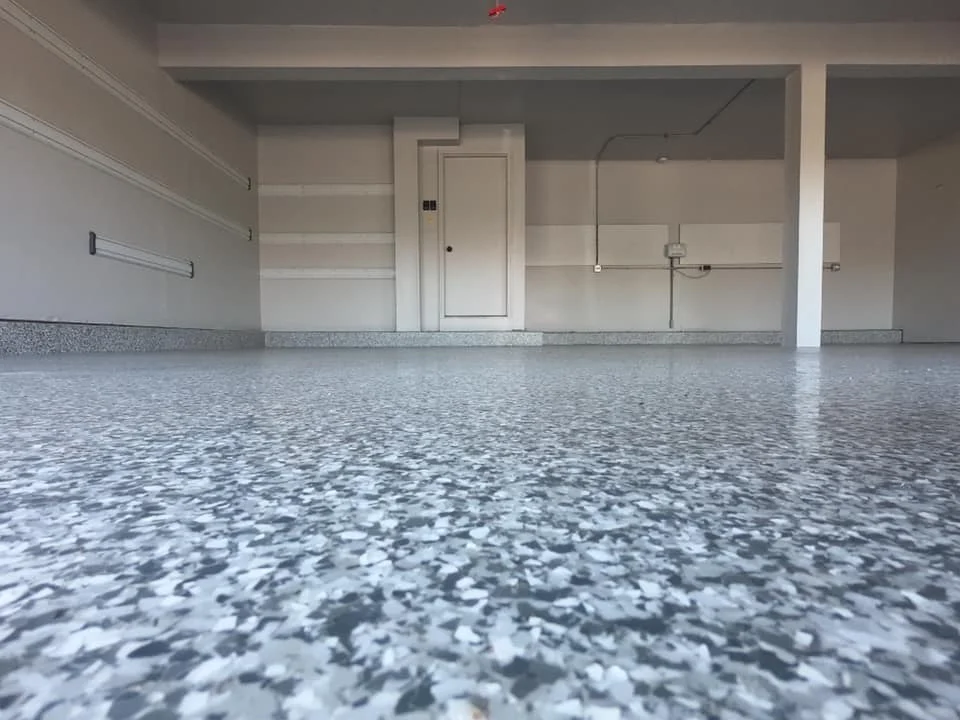
Epoxy is a two-part resin system (hardener plus resin) that creates a hard, glossy, chemical-resistant surface. It’s available in a wide range of colors, flake patterns, and decorative finishes. For indoor spaces without direct UV exposure, epoxy delivers strong performance at a lower price point than polyaspartic.
However, it comes with certain limitations:
- Tires that have been driving on sun-heated pavement soften the epoxy surface, partially bond to it, and pull coating when the car moves.
- UV exposure through open garage doors causes yellowing over time.
- The extended cure time (two to three days before vehicle traffic) creates a longer window where humidity can interfere with adhesion.
Epoxy remains a solid choice for garages that are climate-controlled, see limited vehicle traffic, or function primarily as workshops or storage. Check out our previous post to learn how different garage floor coating options compare.
How Polyaspartic Performs in a Southwest Florida Garage
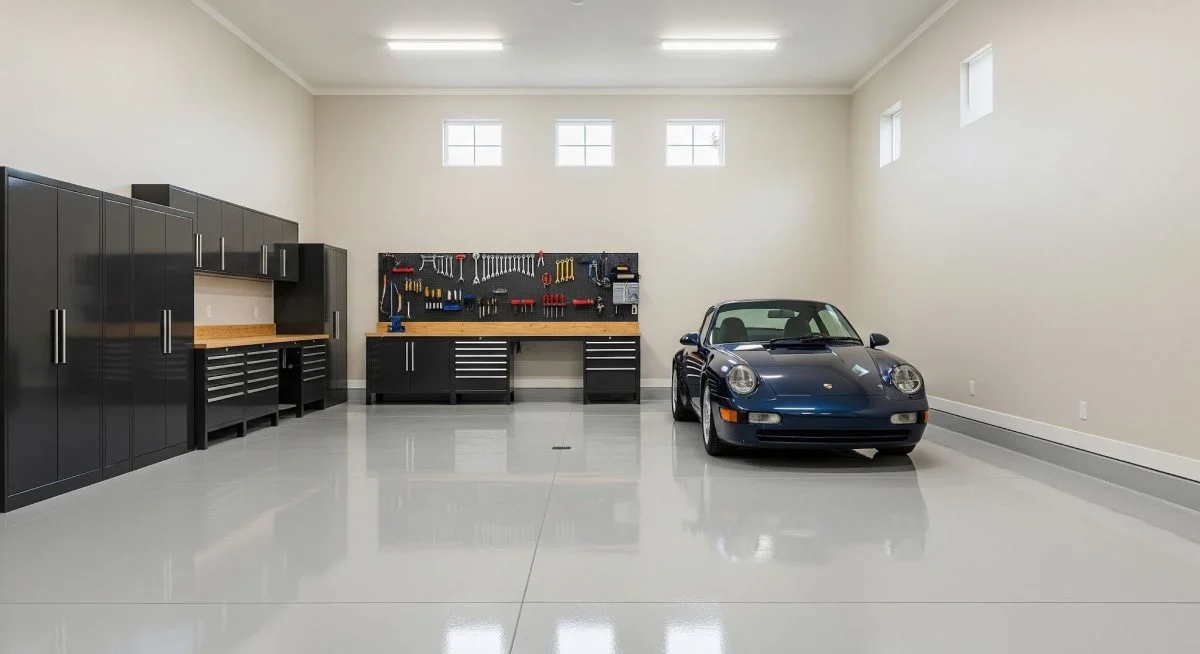
Polyaspartic is an aliphatic polyurea, a fast-curing, UV-stable coating engineered for conditions that challenge standard epoxy. It addresses each of epoxy’s Florida-specific weaknesses.
Heat Stability
Polyaspartic resists softening under the tire temperatures Southwest Florida produces. The coating stays hard and bonded through summer heat without the surface damage that shortens standard epoxy floors’ effective lifespan.
UV Stability
The coating’s UV-stable formulation prevents yellowing. Aliphatic resins don’t degrade under sunlight the way aromatic epoxy does. A garage that receives sun through open doors maintains its original color and clarity over time.
Rapid Cure Time
Polyaspartic cures in hours. The entire garage floor installation can be completed in one day, with the floor walkable that evening and ready for vehicles the next day. In Florida’s humid climate, the shorter cure window means less opportunity for moisture to interfere with adhesion.
The Cost Comparison
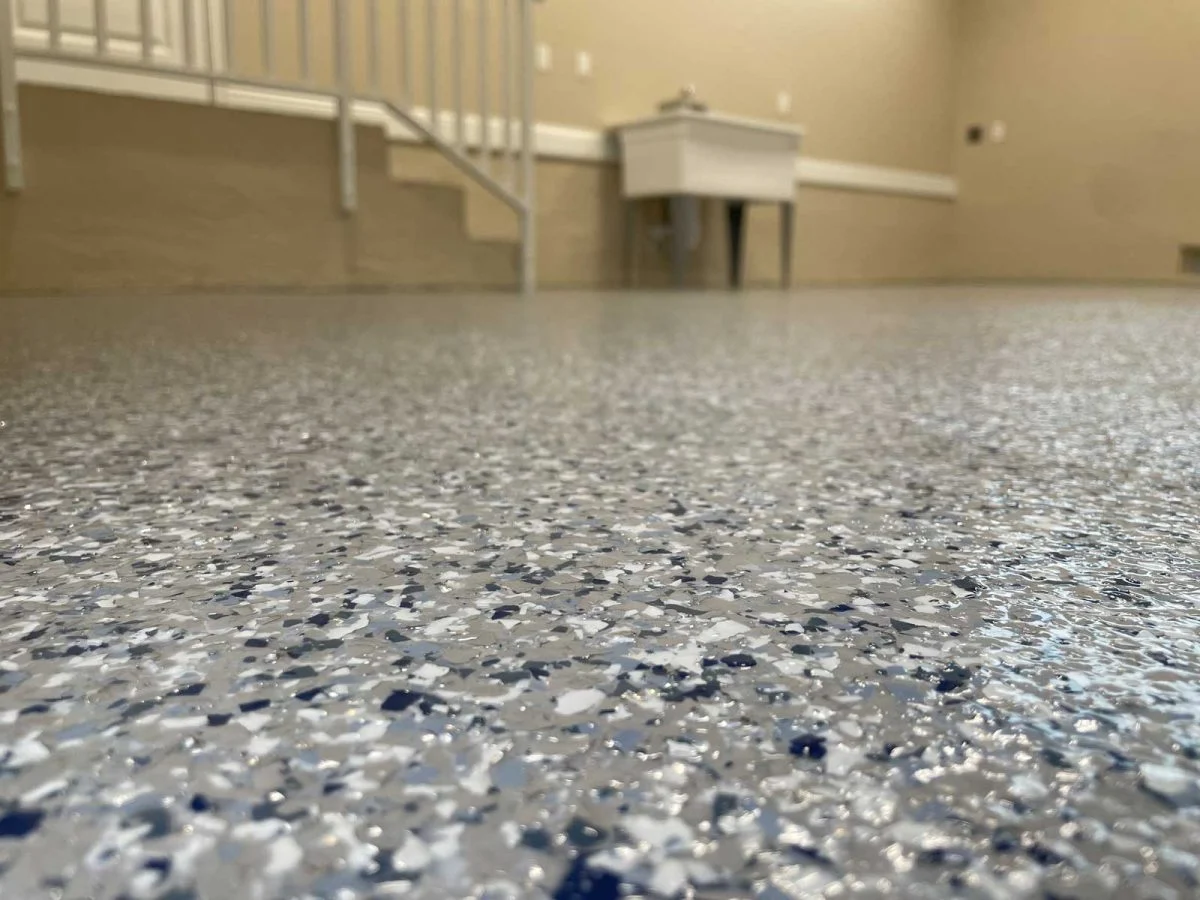
Polyaspartic costs more per square foot than standard epoxy. For a two-car garage in the Fort Myers area, the price difference is meaningful at the point of purchase.
Over five to ten years, the math shifts. Epoxy coatings in Southwest Florida garages commonly begin showing hot-tire damage and UV yellowing well before homeowners expect to recoat. Each recoating cycle includes stripping the failed surface and starting over. Polyaspartic, installed once with proper preparation, is designed to resist that cycle.
Epoxy Floors N More offers both systems because the right answer genuinely depends on the garage. A climate-controlled workshop without daily vehicle traffic may not need polyaspartic’s heat resistance. A garage that sees two cars parking daily in Fort Myers summer heat almost certainly does.
Which System Fits Your Garage

The decision comes down to how the garage is used and what it’s exposed to.
Choose epoxy if the garage is climate-controlled, sees limited vehicle traffic, and is primarily a workshop or storage space. Epoxy delivers a durable, attractive surface at a lower cost when heat and UV aren’t daily factors.
Choose polyaspartic if the garage sees daily vehicle parking, receives sun through open doors, and needs to hold up through Southwest Florida’s summer heat. The higher upfront cost is offset by strong resistance to hot-tire pickup and UV degradation.
Frequently Asked Questions
Is polyaspartic worth the extra cost over epoxy in Florida?
For garages with daily vehicle use in Southwest Florida, yes. The upfront cost difference is real, but polyaspartic eliminates the hot-tire pickup, UV yellowing, and humidity-related adhesion issues that commonly shorten epoxy’s lifespan in this climate. A system that avoids one recoating cycle over its life typically costs less total than epoxy applied twice.
How long does each system last in a Florida garage?
Professional epoxy on properly prepared concrete generally performs for several years in a Southwest Florida garage before showing meaningful wear from heat and UV. Polyaspartic systems are rated for significantly longer service life because their chemistry handles the conditions that cause epoxy to degrade. Epoxy Floors N More installs both and can walk you through expected performance based on your garage’s specific conditions.
Can I switch from epoxy to polyaspartic later?
Yes, but the existing epoxy must be fully removed first. Polyaspartic bonds to concrete, not to another coating. Diamond grinding removes the old system and creates the surface profile polyaspartic needs. Epoxy Floors N More handles the full process, from removal through recoating, for homeowners across Cape Coral and the surrounding area.
Find the Right System for Your Garage
Both systems are professional-grade. The right choice depends on your garage, your climate exposure, and how you use the space. Get a free quote from Epoxy Floors N More by sending us a message or calling (239) 339-7238. We’ll assess your garage and recommend the system that fits.
Most of our garage installs in Fort Myers now use a polyaspartic topcoat over an epoxy basecoat for exactly the reasons covered above.
Written by
Timothy Gonzalez
Epoxy Floors N More shares practical guidance based on floor coating work across Southwest Florida.