The method for removing epoxy floor coatings from concrete depends on how thick the existing coating is, how well-bonded it is to the slab, and what you plan to apply next. Chemical strippers soften the epoxy for scraping. Mechanical methods grind it from the surface.
After evaluating failed coatings before recoating jobs, we’ve found that what surprises homeowners most is how much the removal method affects the next system. Choose the wrong approach and you’re dealing with residue that blocks adhesion or a slab profile that’s too shallow for a new coating to grip.
Epoxy Floors N More handles removal as part of full coating replacement projects across Fort Myers, Cape Coral, and the surrounding Southwest Florida area. Here’s what actually works, and why.
What You’re Removing Matters
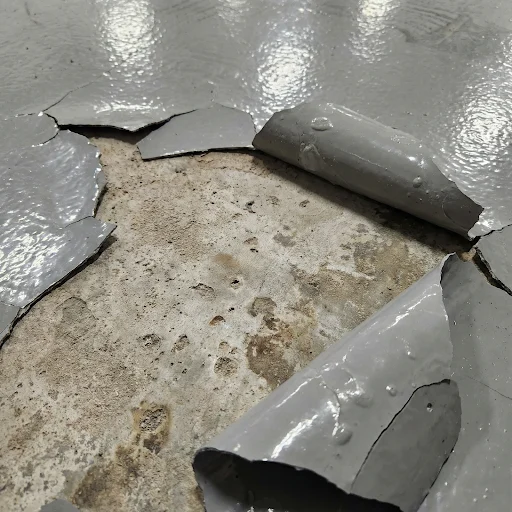
Epoxy floor coatings don’t sit on top of concrete. A properly installed coating penetrates the surface and bonds chemically to the slab’s pores, which is what makes it durable and what makes removal challenging. Thick broadcast systems with vinyl flake or quartz add significant material before you reach the coating layer.
The bond matters as much as thickness. Epoxy delaminating from moisture failure releases in sections without much effort. Epoxy that bonded correctly to a well-prepared slab requires more aggressive action to remove. In Southwest Florida’s humid climate, moisture vapor moving through concrete slabs is a frequent cause of coating failure, and identifying the cause before removal shapes what you do next.
Chemical Stripping: Slower, More Selective

Chemical strippers penetrate the epoxy and soften it from below, breaking the bond between coating and concrete. You apply the product and allow a dwell time ranging from a few hours to significantly longer, depending on the stripper, coating thickness, and ambient temperature. Then you scrape or pressure wash the softened material away.
The advantage is less aggression on the concrete surface. For thin single-coat epoxy or partially delaminated coatings, this gives you more control. The drawback is residue: strippers leave chemical traces that interfere with adhesion, and thorough neutralization is required before recoating. In Southwest Florida’s heat, some solvents flash off faster than the label suggests.
Chemical stripping doesn’t create a surface profile. If you strip chemically and plan to recoat, you’ll still need to mechanically open the slab’s pores before a new system will bond.
Mechanical Removal: More Thorough, More Commonly Used
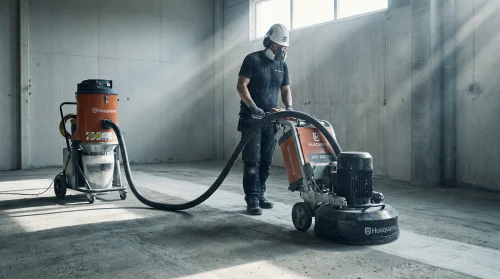
Mechanical removal uses grinding or shot blasting to physically remove the coating. A floor grinder with diamond tooling is standard for residential garages, while shot blasting covers larger commercial areas faster.
Mechanical methods remove the coating and create the surface profile the next coating needs to adhere. That’s why contractors who handle concrete coating work in Fort Myers default to mechanical prep when removing and replacing a system.
The trade-off is dust. Grinding generates significant concrete dust. Vacuum-equipped grinders and respiratory protection are required. For homeowners across Southwest Florida exploring epoxy flooring replacement, this is typically the step worth handing to a professional.
Choosing the Right Method
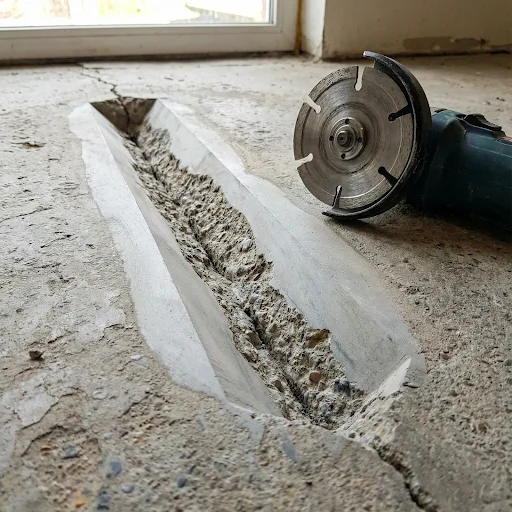
Chemical stripping works for thin, partially delaminated coatings where minimizing surface disruption matters. Mechanical grinding is the right choice when the coating is well-bonded, thick, or you’re replacing it with a system that requires proper slab profile.
For most full replacements, mechanical removal is the correct method. A new polyurea or epoxy garage floor won’t perform as expected over time on a surface that wasn’t properly opened and profiled.
Frequently Asked Questions
Can I remove epoxy from concrete without a floor grinder?
Chemical strippers can soften epoxy for scraping without grinding equipment, but they don’t create the surface profile a new coating needs. If you plan to recoat, mechanical profiling is still required afterward. Chemical removal alone is practical when you’re not applying a new coating right away.
How long does removing epoxy from a garage floor take?
A single-car garage with a well-bonded coating can take several hours to grind mechanically, depending on equipment and coating condition. Two-car garages and thicker systems can take a full day. Chemical methods take longer overall due to dwell time and often need a second pass to clear residue before a new coating goes down.
Will mechanical grinding damage the concrete underneath?
Grinding removes a small amount of concrete surface along with the coating, which is normal and expected. This creates the CSP (concrete surface profile) needed for the next system to adhere and does not structurally compromise the slab. Epoxy Floors N More uses equipment calibrated to remove the coating without overworking the concrete surface.
Start Fresh With the Right Removal Process
Removing epoxy correctly determines how well the next coating performs. If you’re dealing with a peeling floor or planning a complete upgrade, Removing failed epoxy is brutal physical work. If you’re recoating after, you can have our Fort Myers crew handle the removal and recoat in one project — much faster than DIY removal followed by hiring out the install.
contact Epoxy Floors N More for a free on-site evaluation. We’ll identify the right removal method, handle the full process, and install the new system on a properly prepared surface.
Written by
Timothy Gonzalez
Epoxy Floors N More shares practical guidance based on floor coating work across Southwest Florida.