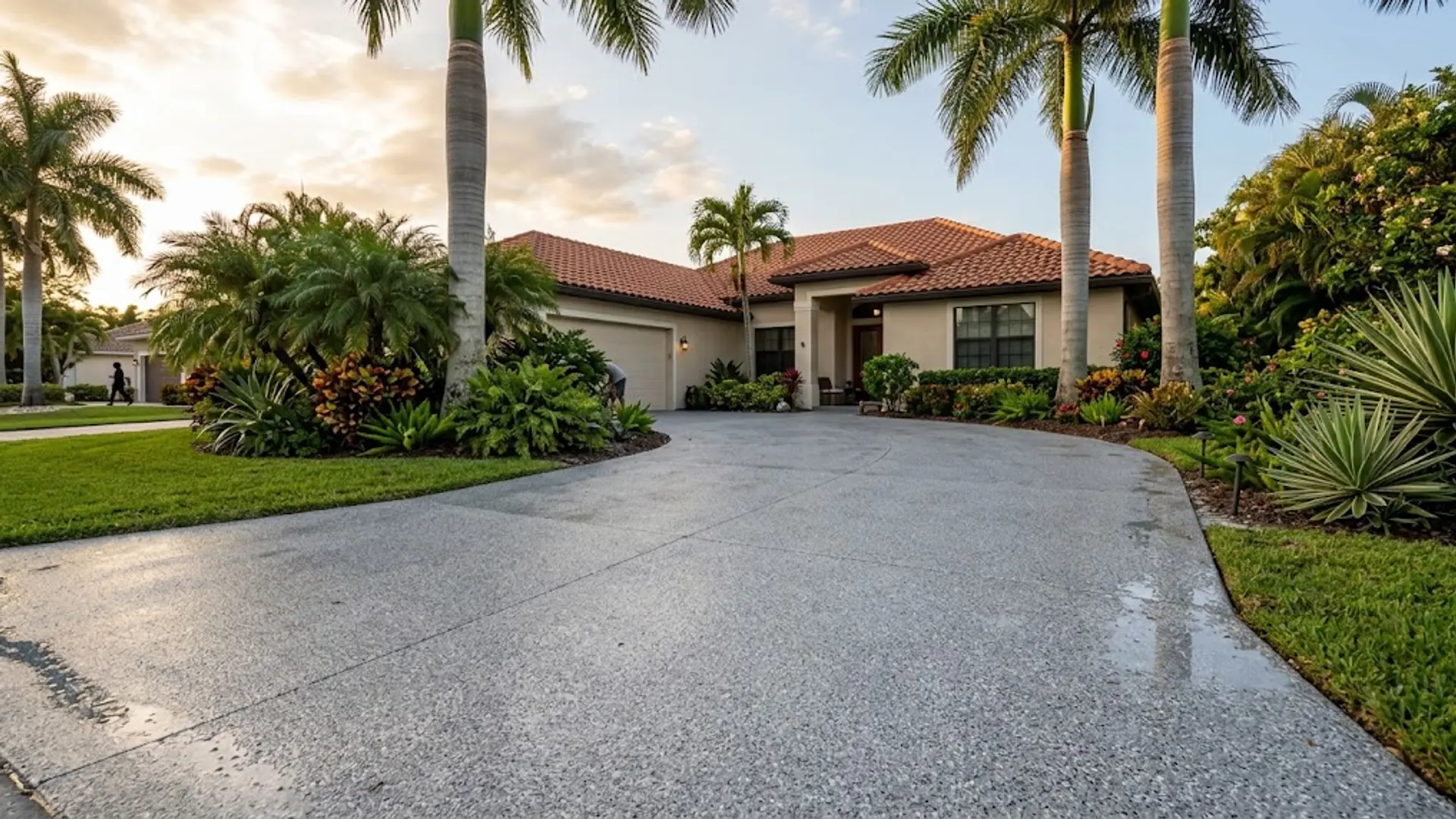
The right driveway coating for a Southwest Florida home comes down to four things: UV stability, wet traction, slab condition, and a prep plan tailored to match. Get those right, and the finish comfortably holds up through intense summer heat and the sudden downpours that roll through Fort Myers most summer afternoons.
Across the region, Epoxy Floors N More starts every driveway project by evaluating what the concrete slab requires for a durable bond, before colors or pricing come into the conversation. Slab preparation, finish choice, and local climate all shape which driveway coating system will last on your home.
Start With the Condition of the Slab

The concrete underneath determines whether a new coating bonds and lasts. Cracks, old sealers or coatings, trapped moisture, and poor drainage all affect how a system performs once it’s down. A driveway that carries cars every day also needs heavier prep than a walkway or side entrance.
Before you get quotes, look at your driveway with these questions in mind:
- Are there visible cracks, and are they still moving or only surface wear?
- Has the concrete been sealed or coated before, and with what?
- Does water pool anywhere on the slab after it rains?
- Are there signs of moisture pushing up from below, such as discoloration or a chalky residue?
- How much vehicle weight and daily traffic will the driveway carry?
The answers set the prep plan: mechanical grinding, crack repair, a moisture check, or all three. Prep has the biggest effect on how long a coating lasts, so settle it before you pick a color.
Choose for UV Stability and Wet Traction
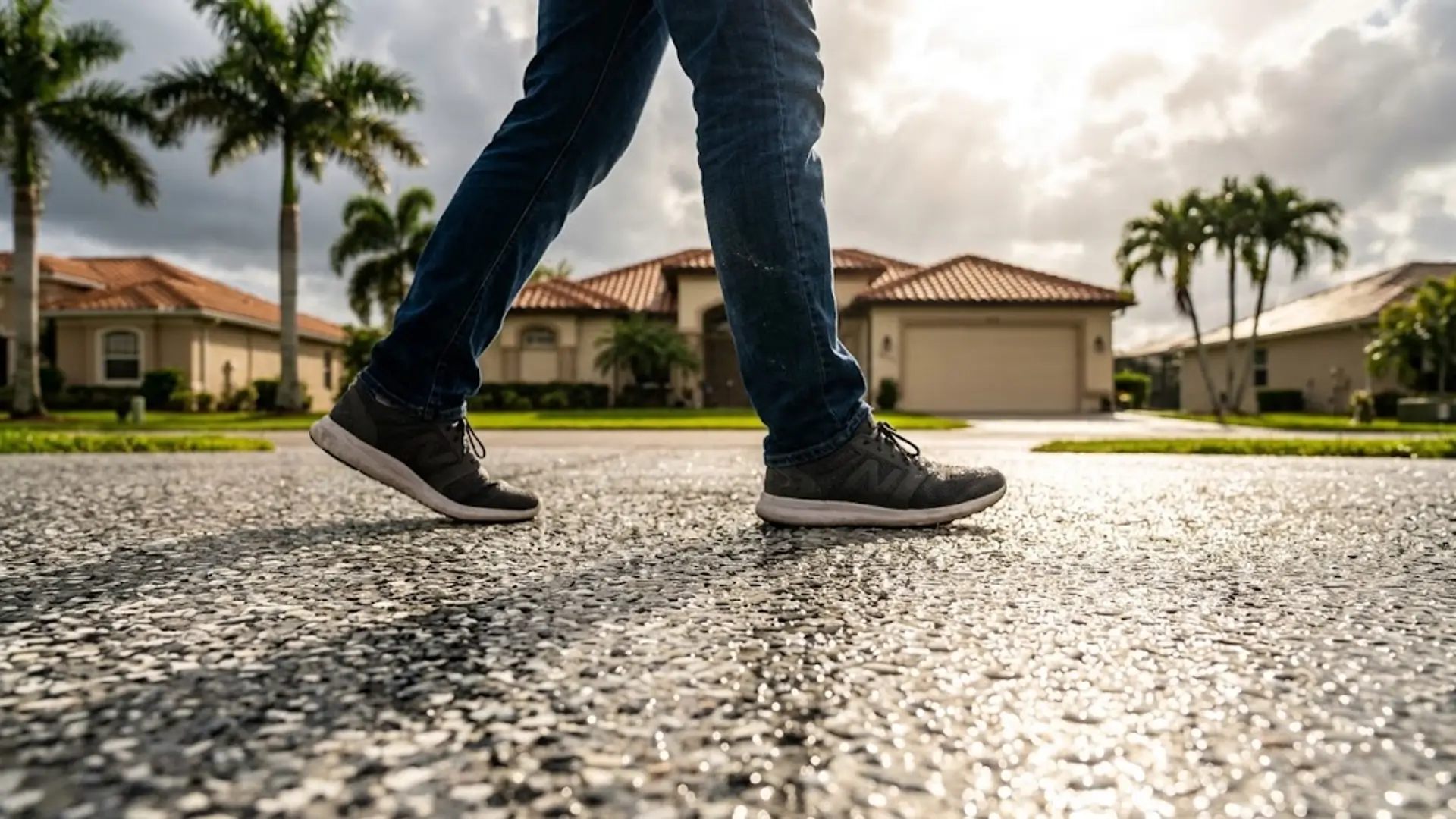
A driveway coating has two separate jobs outdoors. It has to hold its color and finish under direct Florida sun, and it has to stay safe underfoot and under tires when it’s wet.
UV stability comes from the coating’s chemistry. Standard epoxy is made for indoor floors. On an outdoor slab, UV exposure breaks down epoxy resin until it yellows and loses its bond. A UV-stable polyaspartic system holds its color in full sun and resists hot-tire pickup from parked cars.
Wet traction comes from the finish. Driveway systems come in solid, flake, and textured finishes. Flake and textured finishes add grip when rain hits a warm slab, which makes them the better fit for a driveway that sees foot traffic, wet shoes, and cars pulling in right after a storm.
Let the Weather and the Slab Determine the Installation Date

Summer in Southwest Florida brings high humidity and fast-moving storms that can drop heavy rain in a short window, with totals that vary sharply from one neighborhood to the next. Concrete absorbs that water, and moisture traveling up through a slab can weaken a coating’s bond if it goes unmeasured. A good installer schedules around the forecast and tests the slab’s moisture before the coating is applied.
What an Epoxy Floors N More Driveway Evaluation Covers

Every driveway job starts with a moisture evaluation and mechanical grinding, followed by crack repair and a UV-stable polyaspartic system in a solid, flake, or textured finish. Epoxy Floors N More is a family-owned company with over 18 years of combined experience. It is HomeAdvisor Screened and Approved, Top Rated, and Elite Service certified. The team coats driveways in Fort Myers, Lehigh Acres, Naples, Cape Coral, LaBelle, Punta Gorda, Bonita Springs, Ave Maria, and Babcock Ranch.
Frequently Asked Questions
Which type of coating holds up best on a Florida driveway?
A UV-stable polyaspartic coating holds up best on a Florida driveway. It keeps its color in direct sun, resists hot-tire pickup, and can be finished with flake or texture for grip when the surface is wet.
How do I know if my driveway needs crack repair or a moisture evaluation before coating?
Your driveway needs crack repair or a moisture evaluation if it has visible cracks, an old sealer or coating, standing water after rain, or discoloration and chalky residue. An on-site evaluation checks for moisture and slab movement and sets the prep plan from there.
What finish helps a driveway stay safer when it’s wet?
A textured or flake finish helps a driveway stay safer when it’s wet. Both add grip for shoes and tires, which matters in a climate where driveways get wet often and see traffic right after rain.
When is the best time to coat a driveway in Southwest Florida?
The best time to coat a driveway in Southwest Florida is during a stretch of dry weather, after the slab has passed a moisture check. The drier months from roughly November through April provide the most scheduling room, and summer installs are timed around the afternoon storm pattern.
Ready to Talk Through Your Driveway?

The right coating starts with a look at your concrete. Epoxy Floors N More will check your driveway for cracks, prior coatings, drainage, and moisture, then walk you through the prep it needs and the finishes that fit how you use it. You’ll know what the job involves before any work is scheduled, and the installation can be timed around the weather so the coating goes down on a dry, ready slab.
If your driveway is starting to show its age, or you want a finish that holds up to Florida heat and rain from day one, Call (239) 339-7238 to set up your driveway evaluation.
Written by
Timothy Gonzalez
Epoxy Floors N More shares practical guidance based on floor coating work across Southwest Florida.