Epoxy garage floors outperform tile in Southwest Florida in moisture tolerance, install time, and long-term maintenance, though tile still fits homeowners who want tile’s aesthetic and are willing to keep the grout clean. Ceramic and porcelain tile deliver a specific finished look that’s similar to kitchens or bathrooms. Epoxy delivers a seamless surface built for garage conditions.
Epoxy Floors N More installs garage floor coatings in Fort Myers and Lee County, where the epoxy-vs-tile question comes up on nearly every quote. Both are legitimate residential options, and both fail differently in Fort Myers’ heat, humidity, and daily use. Below, we break down how each surface holds up against Southwest Florida heat, moisture, and daily traffic.
How Each Handles Southwest Florida’s Heat and Humidity

Tile grout is the weak point in a Fort Myers garage. High humidity drives moisture through the slab and into the porous grout lines between tiles. Within three to five years in a garage that sees any AC-line condensation or tracked-in rain, grout begins to develop hairline cracks and mildew, often separating at the tile’s edges. Individual tiles can also crack due to thermal shock when a hot tire parks on cool tiles that have just been rinsed with cold water.
Epoxy is a seamless system bonded to the concrete. No grout lines to fail, and a UV-stable polyaspartic topcoat handles the heat cycle that cracks tile. While there are different types of garage floor coatings, a professionally installed epoxy system consistently outlasts a ceramic tile floor of the same age in Southwest Florida’s intense afternoon sun and rain.
Cost and Installation Timeline
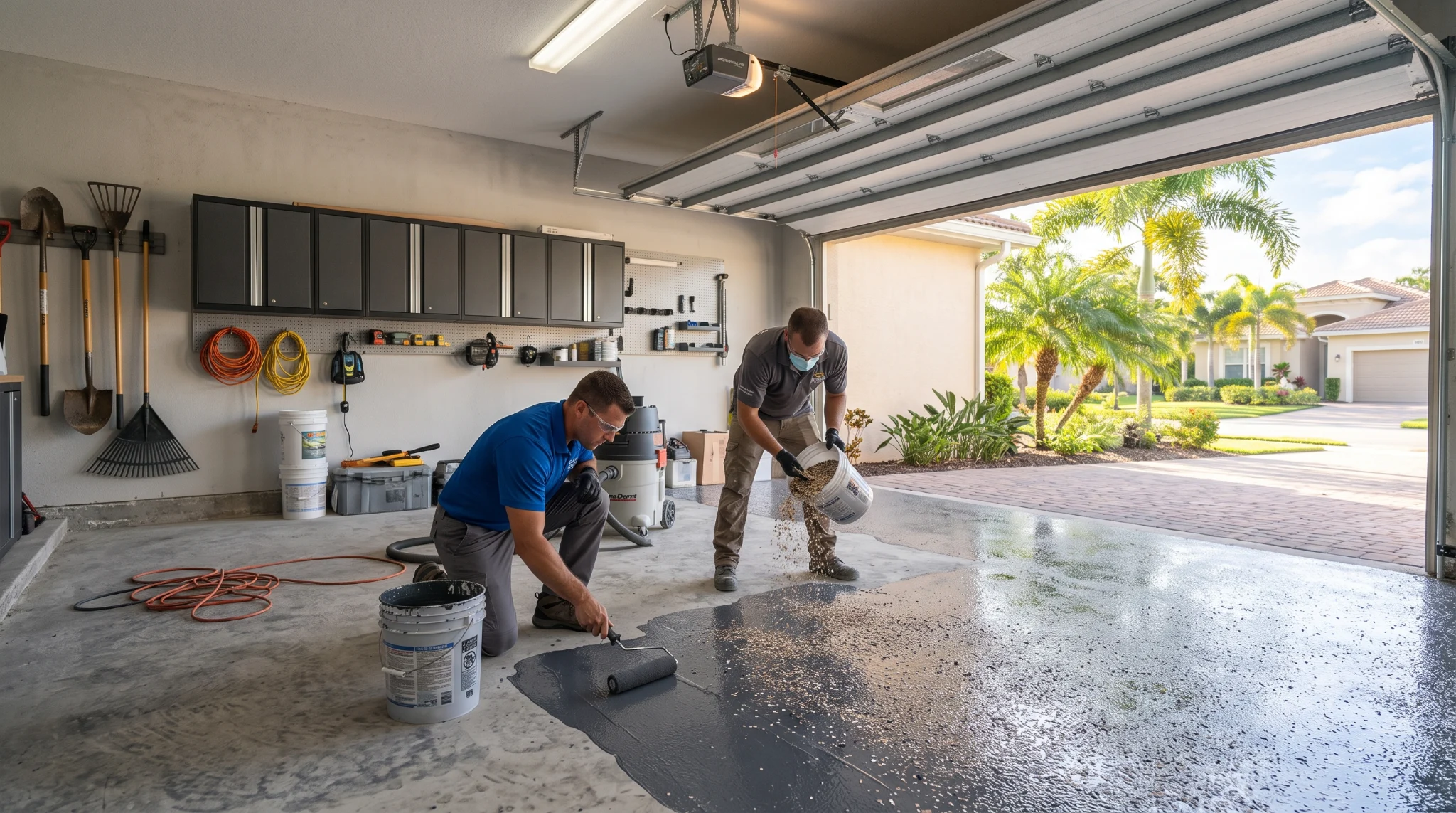
Epoxy in the Southwest Florida market runs $4 to $12 per square foot installed depending on the system. Interlocking garage tile runs $3 to $8 per square foot for the product alone, plus $2 to $4 per square foot for professional installation, totalling $5 to $12. Ceramic or porcelain tile lands higher at $8 to $15 per square foot installed.
The difference in installation time surprises most homeowners. Epoxy Floors N More completes a standard two-car epoxy installation in just one to two days using a polyaspartic topcoat, with the floor ready for foot traffic the next day (about 24 hours). In contrast, tiling a two-car garage takes two to four days, plus another two to three days of prep and grout curing before it can handle vehicle traffic.
Appearance and Design Options
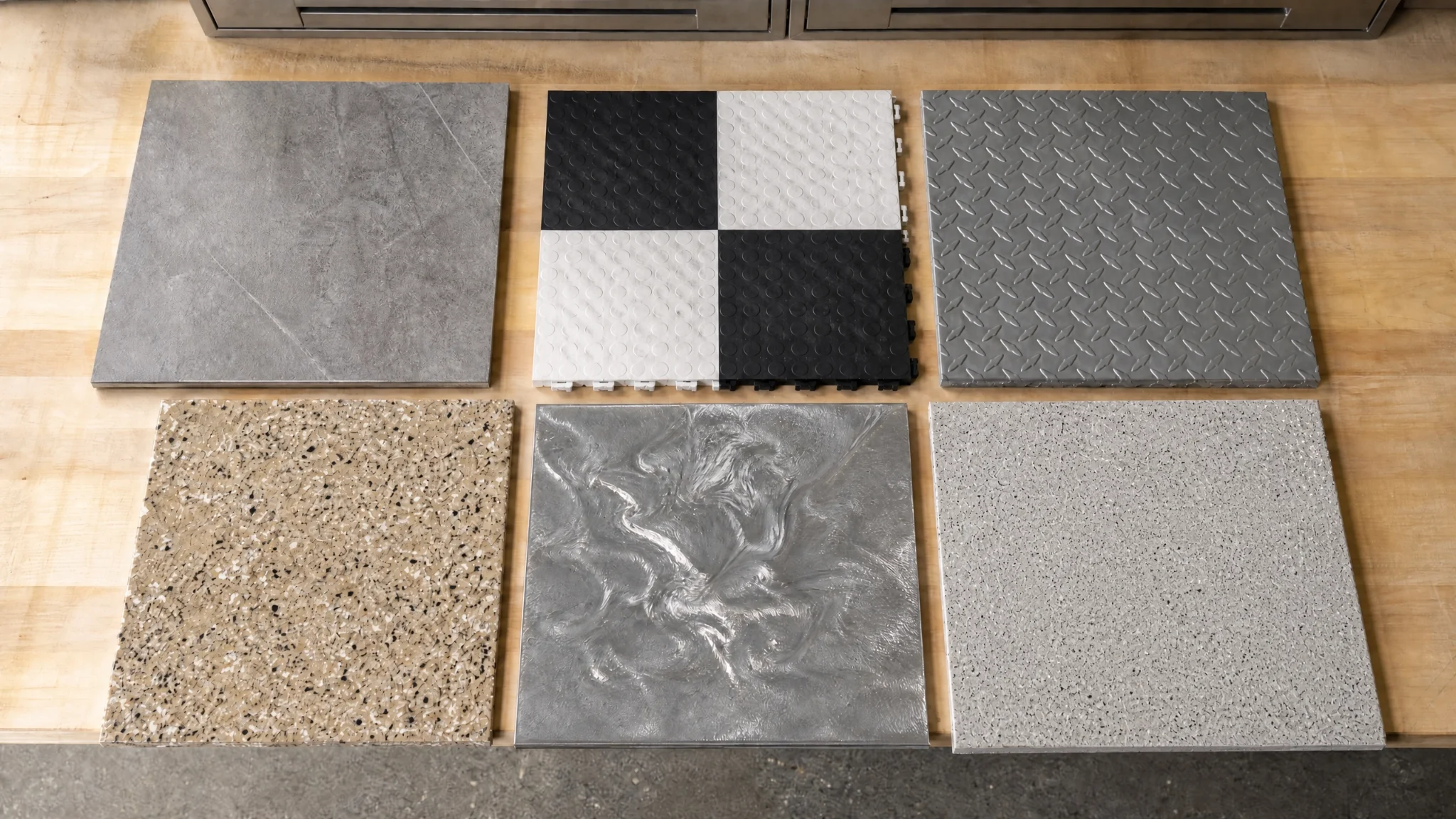
Tile has a specific finished look. Homeowners who want their garage floor to match their foyer, laundry, or kitchen tile carry the aesthetic through the transition. Interlocking garage tiles come in solid colors, checker patterns, and diamond-plate textures for a more industrial feel.
Epoxy offers more design flexibility for a garage-specific space. Decorative flake blends match interior color schemes, and metallic epoxy pigments produce three-dimensional depth effects tile can’t replicate. Custom logo inlays, multi-color patterns, and full-color coverage are all standard epoxy options. The best coating for a garage floor depends on how much of a design statement the floor needs to make.
Maintenance and Cleaning
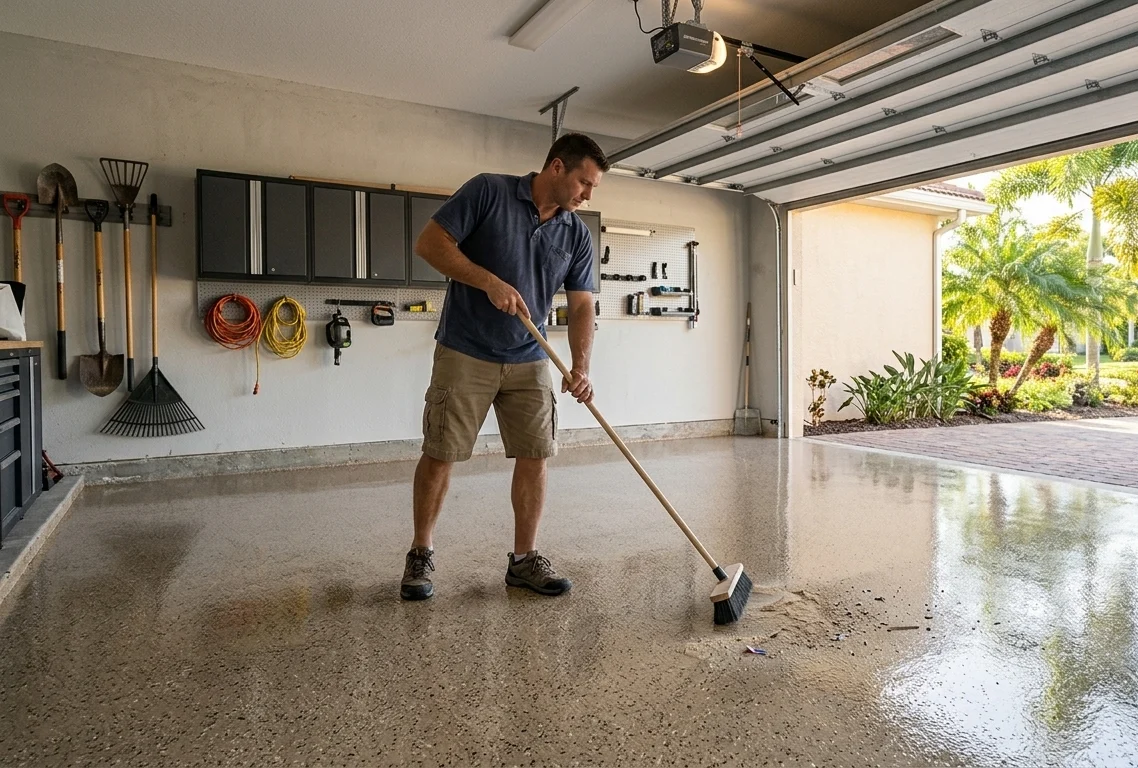
A seamless epoxy floor can be cleaned with a soft-bristle broom and a damp mop. Oil, gasoline, and household chemicals can be wiped clean without absorbing into the surface. No grout lines to scrub, no tile-edge caulking to reseal, no individual tiles to replace.
Tile has grout lines that need scrubbing to prevent mildew, a real maintenance ask in Southwest Florida’s humidity. It also requires periodic re-grouting or sealing to keep moisture out of the substrate. Tile allows you to replace individual damaged pieces, which is one small advantage over epoxy. But for a Cape Coral homeowner comparing regular tile maintenance to epoxy’s effortless upkeep, epoxy wins hands down.
Frequently Asked Questions
Can I install epoxy over a tile garage floor?
No, you cannot install epoxy over a tile garage floor. Tile must be removed before epoxy installation. Epoxy bonds to bare concrete after diamond grinding, not to tile or grout surfaces. Epoxy Floors N More handles tile removal and slab prep as part of the full installation for homeowners switching from tile to a coating system.
Is tile or epoxy more slip-resistant when wet?
Epoxy with anti-slip aggregate broadcast into the topcoat is more slip-resistant when wet than smooth ceramic or porcelain tile. Interlocking garage tile with a textured surface performs similarly to textured epoxy. For garages that see tracked-in Florida rain, epoxy with an aggressive anti-slip additive is the safer choice.
Which lasts longer in a Fort Myers garage: tile or epoxy?
A professionally installed polyaspartic system with a UV-stable topcoat typically holds up for fifteen to twenty years in Fort Myers conditions. Tile grout in the same garage often begins failing at three to five years, requiring re-grouting and mildew treatment. Individual tiles may last, but the grout lines always give out first.
Get the Right Answer for Your Garage
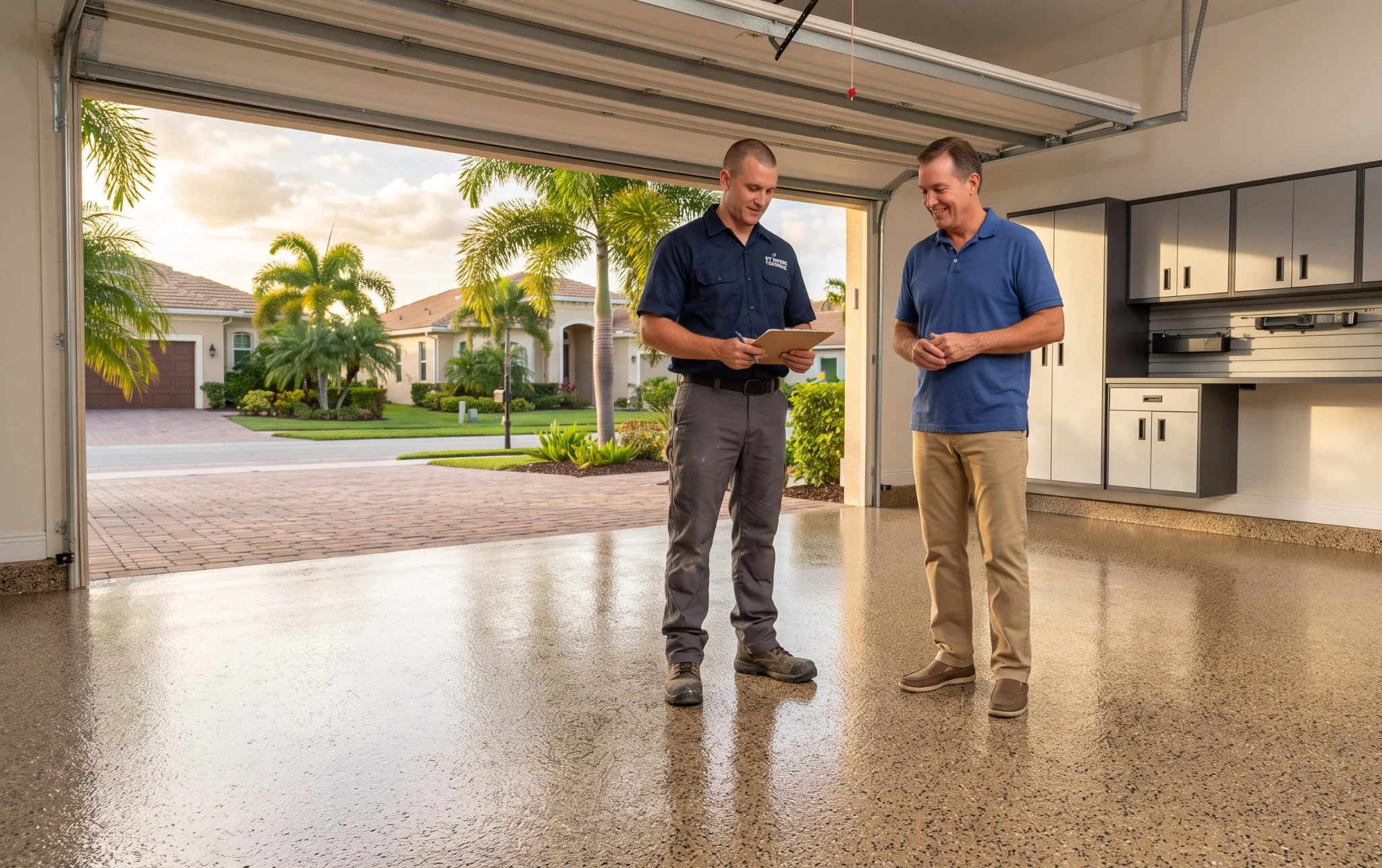
The comparison between epoxy and tile depends on how you use the garage, the humidity conditions the slab is exposed to, and how much maintenance you’re willing to take on year after year. Epoxy Floors N More will walk the space and recommend the system that fits. Request a free quote or call (239) 339-7238.
Written by
Timothy Gonzalez
Epoxy Floors N More shares practical guidance based on floor coating work across Southwest Florida.