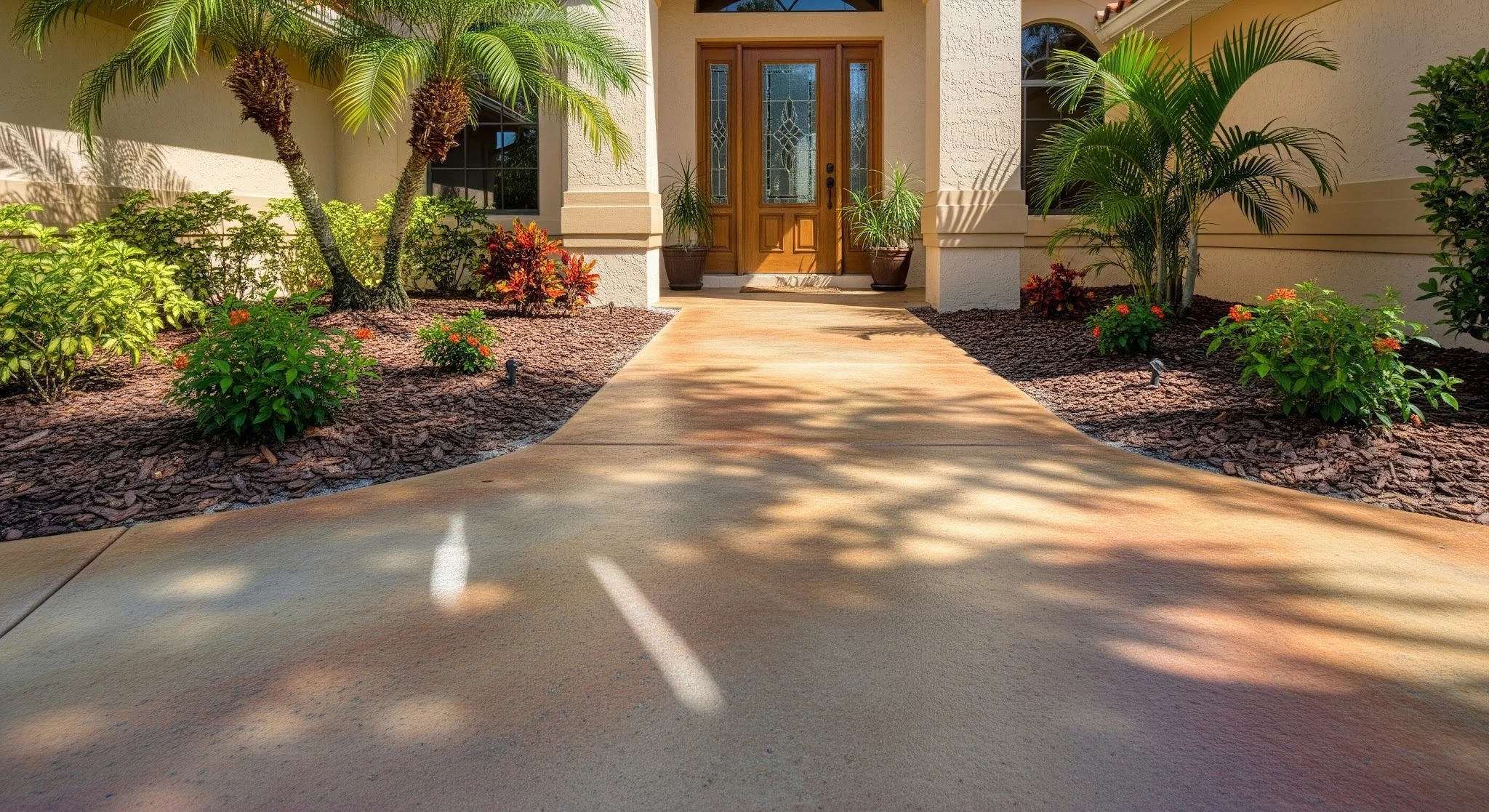
Epoxy vs stained concrete floors is a choice between two fundamentally different approaches to concrete finishing. Epoxy adds a protective coating layer on top of the concrete. Staining changes the color of the concrete itself without adding a surface film. Each has distinct strengths depending on the space, the look you want, and how the floor will be used. Epoxy Floors N More offers epoxy flooring and concrete staining to homeowners and businesses across Fort Myers, Cape Coral, Naples, and Southwest Florida.
Most homeowners assume that epoxy and stained concrete are just two versions of the same thing: a way to make a concrete floor look better. They’re not. They work through completely different mechanisms, they produce completely different visual results, and they hold up differently depending on what the floor faces. Understanding that distinction before you choose is what prevents the wrong finish on the wrong surface.
How Epoxy Flooring Works

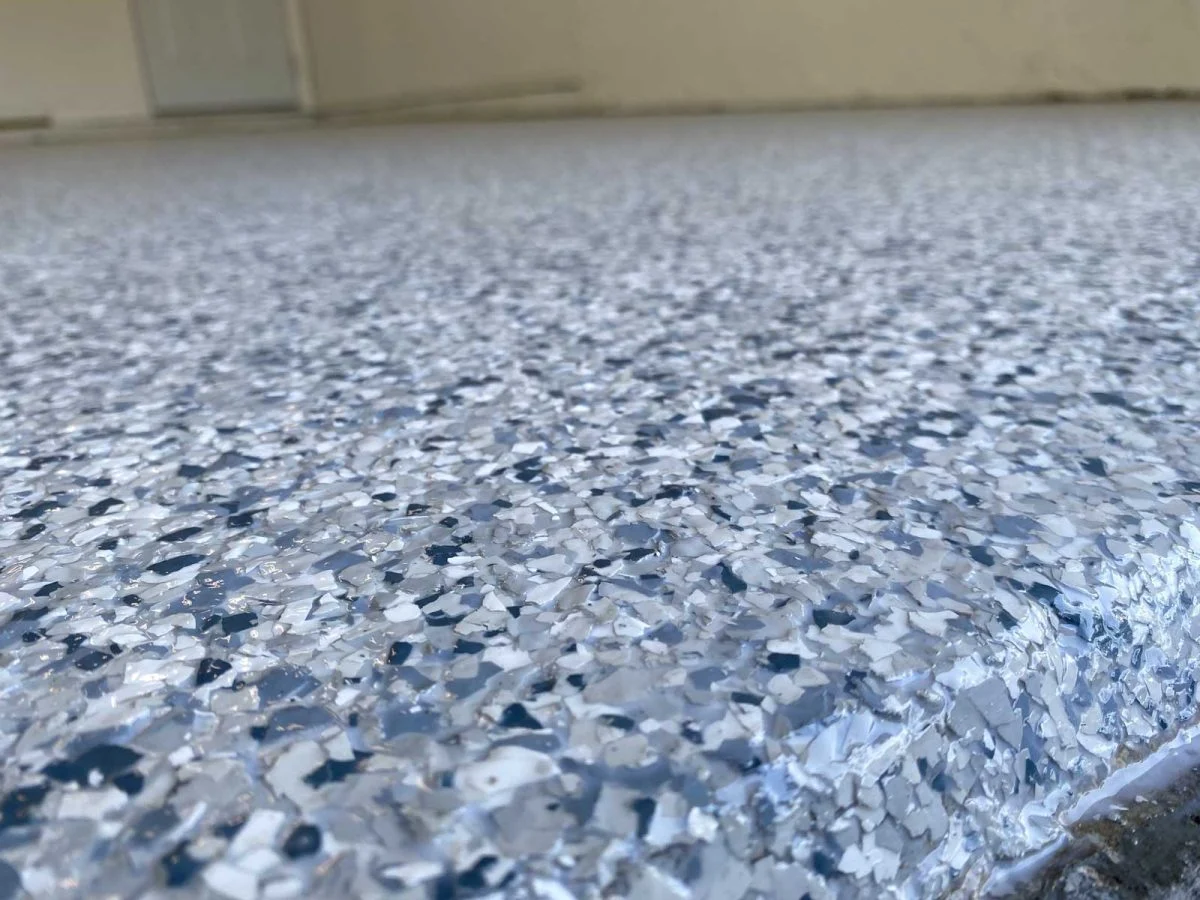
Epoxy is a multi-layer coating system applied on top of prepared concrete. The base coat bonds mechanically to the ground surface, decorative elements (flake, metallic pigment, quartz) are broadcast into the wet layer, and a clear topcoat seals and protects everything underneath.
The result is a thick, glossy, sealed surface that resists chemicals, stains, impact, and abrasion. Epoxy creates a surface you can’t see through; the concrete beneath is completely covered. Colors are uniform, finishes are customizable, and the floor has a uniform, finished appearance rather than a natural stone look.
Epoxy is the standard for garages, commercial kitchens, warehouses, and any space where the floor needs to take abuse and be easy to clean. The sealed surface prevents oil, chemicals, and moisture from reaching the concrete.
How Stained Concrete Works
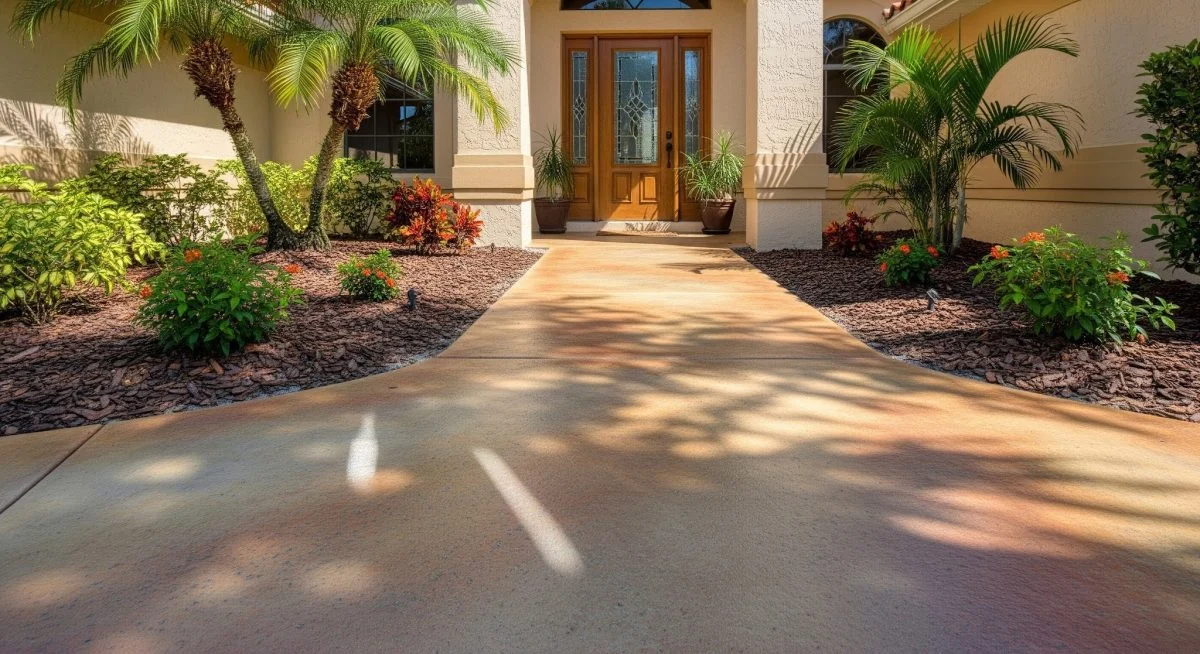
Concrete staining changes the color of the concrete without adding a layer on top. Acid stains react chemically with the minerals in the cement, producing translucent, earth-toned color variations unique to each slab. Water-based stains offer a broader color range with more consistent results.
Because the color is in the concrete rather than on it, stained floors have a natural, organic appearance with tonal depth that coatings don’t replicate. The concrete’s texture and character remain visible. A protective sealer applied after staining adds UV protection and makes the surface easier to clean.
Staining is popular for interior living spaces, patios, pool decks, and any surface where aesthetics are a priority and the natural look of concrete fits the design.
How They Compare on Performance
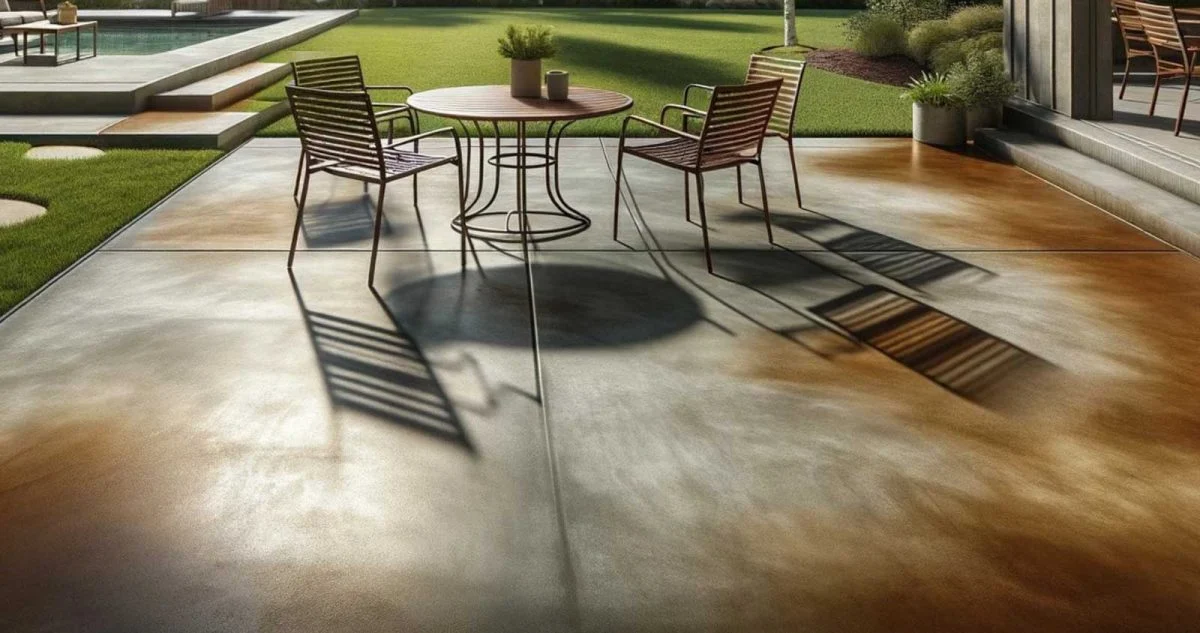
While both are excellent upgrades, the best choice depends on whether the space prioritizes heavy-duty protection or a natural aesthetic.
Durability
Epoxy wins on raw durability. The multi-layer coating system handles impact, abrasion, and chemical exposure that would damage stained concrete. For garages and commercial spaces, this matters. For a living room or patio with foot traffic only, stained concrete’s durability is more than adequate.
Appearance
Stained concrete wins on natural beauty and uniqueness. Each slab reacts differently to acid stain, creating a one-of-a-kind floor with organic color variation. Epoxy offers more control over the final look through flake, metallic, and solid-color options but produces a manufactured aesthetic. The choice here is purely about which visual style fits the space.
Cost
Staining typically costs less than a full epoxy system because the material and application process are simpler. The price gap narrows when a premium sealer is applied over the stain. For homeowners on a budget who want a significant visual upgrade, staining delivers strong value. For spaces that need the protective performance of a coating, epoxy justifies its higher cost.
Maintenance
Neither finish is maintenance-free, but the upkeep differs. Stained concrete typically needs resealing every few years in Southwest Florida’s climate, depending on sun exposure and foot traffic. Epoxy needs less frequent attention but eventual recoating when the topcoat wears through from heavy use. Neither is maintenance-free, but both are far lower-maintenance than tile, carpet, or unfinished concrete.
Which Finish Fits Which Space
Making the right selection often comes down to answering specific questions about preparation, maintenance, and long-term performance.
- For garages, workshops, and commercial spaces: epoxy. The surface protection, chemical resistance, and easy cleaning outweigh the aesthetic difference.
- For living rooms, entryways, and interior accent areas: stained concrete. The natural beauty and tonal depth create a design-forward floor that epoxy’s uniform finish can’t match.
- For patios and outdoor surfaces: either can work, but staining with a UV-resistant sealer handles Florida’s outdoor conditions well and produces a more natural look. Epoxy (specifically UV-stable polyaspartic systems) works better when slip resistance and heavy-duty protection are the priorities.
Frequently Asked Questions
Can I stain a concrete floor that already has epoxy on it?
No. The existing epoxy must be completely removed before staining. Stain needs direct contact with bare concrete to penetrate and react. Diamond grinding removes the epoxy and opens the surface for staining. Epoxy Floors N More handles the full process from removal through staining for homeowners across Southwest Florida, serving communities such as Naples, Cape Coral, and LaBelle.
Which lasts longer in Southwest Florida: epoxy or stained concrete?
Both last for years when properly installed and maintained. Epoxy’s protective coating handles heavier abuse (chemicals, impacts, vehicle traffic) without showing wear. Stained concrete’s color is permanent because it’s part of the slab, but the protective sealer needs periodic reapplication depending on exposure and use. For most residential surfaces in this climate, both deliver strong longevity.
Can I combine epoxy and staining in the same space?
Not on the same surface, but they work well in different zones of the same property. A homeowner might stain the living room and patio for a natural look while coating the garage with epoxy for protection and easy cleaning. Epoxy Floors N More installs both systems and can plan a cohesive approach across multiple surfaces.
Choose the Finish That Fits Your Floor
Epoxy protects. Stain transforms. Both improve concrete dramatically, but they serve different purposes and produce different results. Ready to upgrade your space? Request a free, no-obligation quoteIf you’ve decided stained concrete is the right call for your space, our concrete staining team in Fort Myers can show you color samples in person before you commit.
from Epoxy Floors N More or call (239) 339-7238 to take the next step.
Written by
Timothy Gonzalez
Epoxy Floors N More shares practical guidance based on floor coating work across Southwest Florida.