
Epoxy vs polished concrete compares two durable flooring systems with different strengths. Polished concrete costs $3–$10 per square foot and typically lasts 20+ years with minimal maintenance. Epoxy costs $4–$12 per square foot, typically lasts 10–20 years, and adds chemical resistance that polished concrete lacks. Epoxy Floors N More serves residential and commercial clients across Southwest Florida with professional epoxy coating systems.
A warehouse in Lehigh Acres had polished concrete for six years before chemical spills from stored pool supplies etched permanent stains into the surface. After switching to a commercial epoxy system, that same floor now handles daily chemical exposure with no visible wear. The barrier layer makes the difference.
How Each Floor System Works
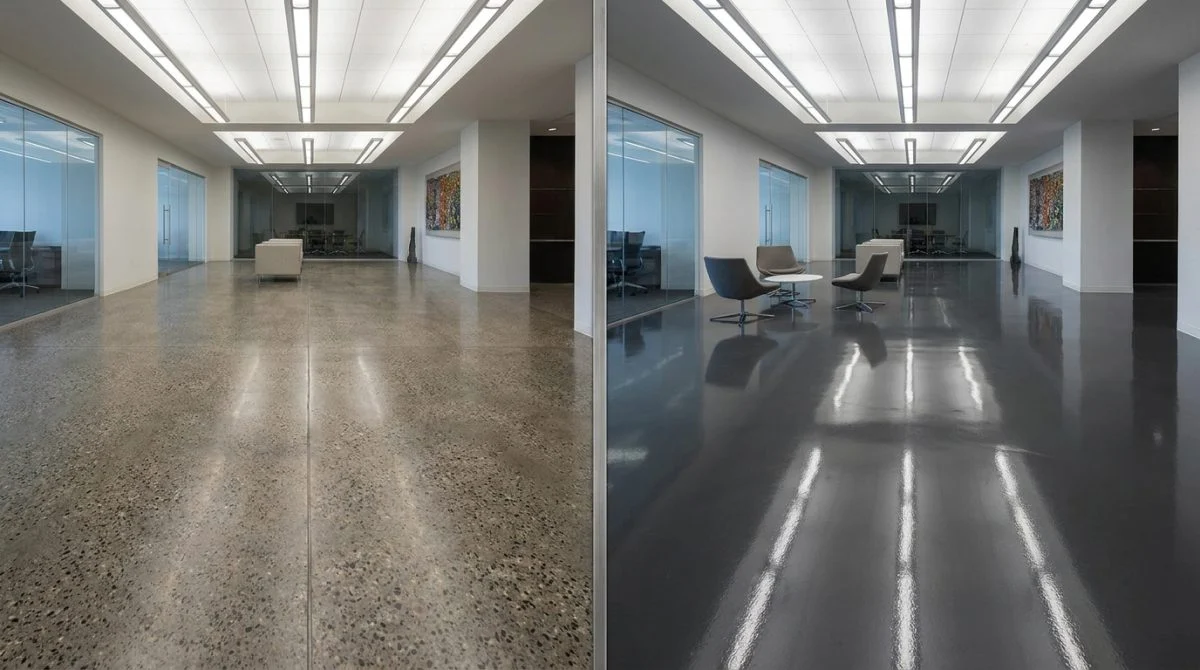
These two systems start with the same materia, concrete, but achieve their final performance through opposite approaches.
Polished Concrete
Polishing grinds the concrete surface through progressively finer diamond pads (typically 50-grit to 3000-grit) until the surface becomes smooth and reflective. A densifier chemical hardens the surface during the process. The final product is the concrete itself, refined and sealed. No coating sits on top.
Epoxy Coating
Epoxy adds a multi-layer coating system on top of prepared concrete. After diamond grinding to create a surface profile, a primer, base coat (often with decorative elements), and topcoat bond to the slab. The final product is a separate material bonded to the concrete, creating a chemical and physical barrier between the environment and the underlying slab.
Cost and Longevity Side by Side
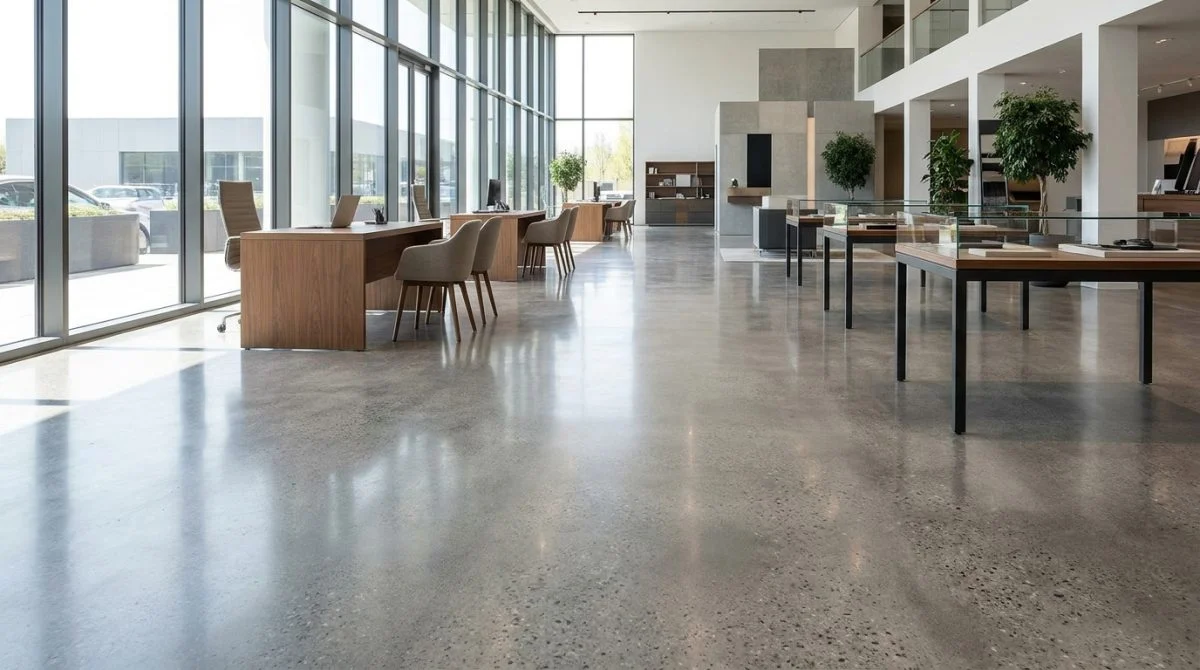
Both systems deliver long-term value, but their cost structures differ in important ways for Southwest Florida property owners.
Installation Cost
- Polished concrete: $3–$10 per square foot (depends on gloss level and slab condition)
- Epoxy coating: $4–$12 per square foot (depends on system type and decorative options)
Lifespan and Maintenance
-
Polished concrete: Typically 20+ years. Needs periodic re-densifying and buffing every 3–5 years.
-
Epoxy coating: Typically 10–20 years depending on traffic and chemical exposure. May need recoating at end of life ($1–$3 per square foot).
Polished concrete costs less to maintain over decades. Epoxy costs more upfront per square foot but protects the slab from damage that polished concrete allows through. How long epoxy floors last in Southwest Florida depends heavily on the topcoat quality and UV exposure level.
Where Each Floor Performs Best
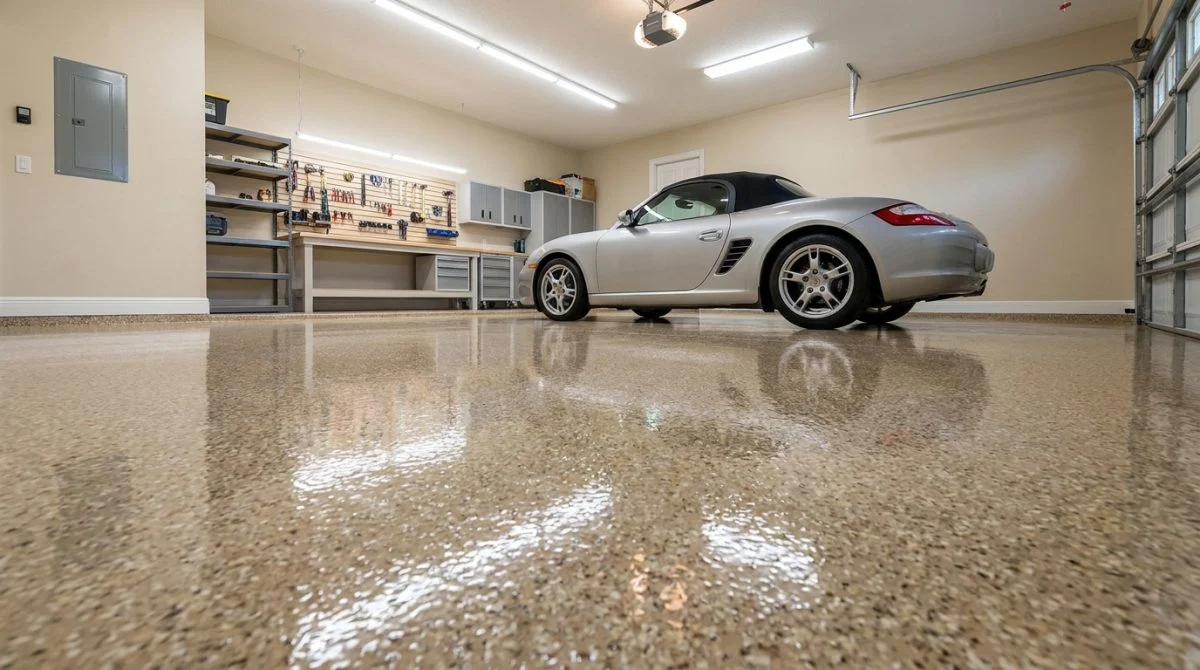
The right choice depends entirely on what the floor needs to handle day-to-day.
Choose Polished Concrete When:
- The space is a retail store, office, or showroom where aesthetics and foot traffic dominate
- Chemical exposure is minimal or nonexistent
- You want the lowest possible long-term maintenance cost
- The existing slab is in good condition with minimal cracks or damage
Choose Epoxy When:
- The floor handles oil, chemicals, salt, or automotive fluids (garages, kitchens, warehouses)
- You want custom colors, flake patterns, or metallic finishes
- The slab has damage that needs covering rather than exposing
- Slip resistance matters (coatings can incorporate anti-slip texture)
For commercial flooring in restaurants, warehouses, and medical facilities, epoxy’s chemical barrier is typically the deciding factor. For residential living spaces where you want an industrial-modern aesthetic without chemicals, polished concrete delivers at lower maintenance cost.
Frequently Asked Questions
Can you polish a concrete floor that already has epoxy on it?
The epoxy must be fully removed first through diamond grinding. Once the coating is stripped and the bare slab is exposed, polishing can proceed normally. Removal adds $1–$3 per square foot to the polishing project cost.
Which floor is better for a residential garage in Southwest Florida?
Epoxy wins for garages because it resists oil, gasoline, brake fluid, and road salt tracked in from coastal driving. Polished concrete often stains permanently from these chemicals. Epoxy Floors N More recommends a polyaspartic-topped epoxy system for garages exposed to Florida heat and UV through open doors.
Does polished concrete get slippery when wet?
High-gloss polished concrete (3000-grit and above) becomes slippery when wet. Lower-gloss finishes (800-grit) maintain better traction. For areas that get wet regularly, epoxy with anti-slip aggregate or a penetrating sealer on honed concrete provides safer footing.
Match the Floor to How You Use the Space

Polished concrete suits spaces where appearance and low maintenance matter most. Epoxy suits spaces where chemical resistance, custom design, and surface protection drive the decision. Both are good floors but the wrong one for your use case costs more in damage, maintenance, or premature replacement than choosing correctly from the start.
Request a free consultation from Epoxy Floors N More at (239) 339-7238 to discuss which system fits your residential garage, commercial space, or industrial facility.
Written by
Timothy Gonzalez
Epoxy Floors N More shares practical guidance based on floor coating work across Southwest Florida.