Epoxy floor over tile is possible when the existing tile is structurally sound, firmly bonded, and prepared through mechanical grinding. The process removes the glaze, fills grout lines, and creates a profile that lets epoxy bond permanently. Epoxy Floors N More handles residential epoxy flooring in Fort Myers and across Southwest Florida on a range of substrates, including tile.
Should you keep the tile or rip it out first? That’s the decision many homeowners face when they want epoxy without the mess of a full demolition. Whether the tile stays or goes depends on three conditions most contractors check before grinding a single square foot.
When Epoxy Over Tile Works
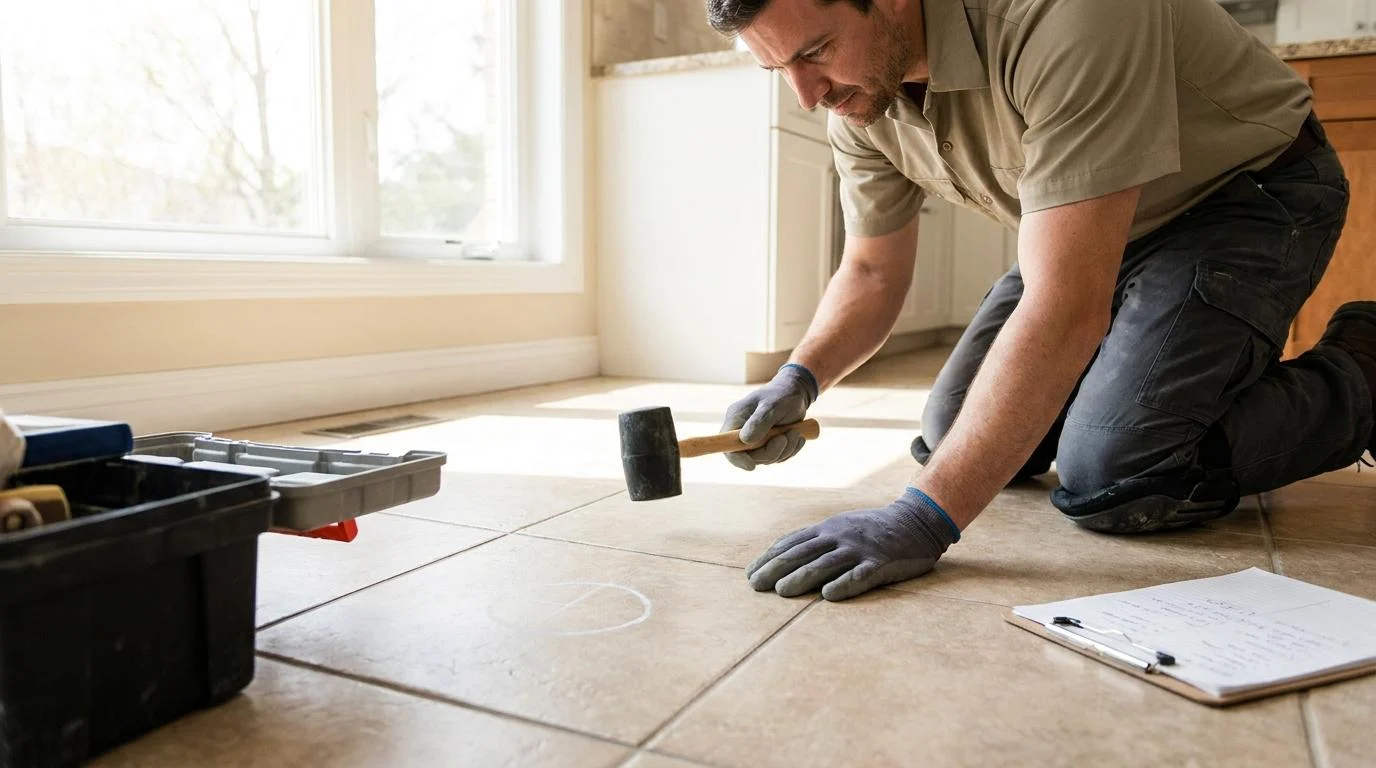
Coating directly over tile works when three conditions are met: the tile is firmly attached to the substrate with no hollow spots, the surface is free of major cracks or movement, and the grout lines are intact and level enough to fill.
A contractor tests for hollow tiles by tapping across the surface with a rubber mallet. Tiles that sound hollow have lost their bond to the concrete underneath, and epoxy applied over loose tile will eventually crack and delaminate along with the tile beneath it.
The tile material matters too. Ceramic and porcelain tiles accept epoxy after grinding because the grinder can remove the glaze and expose a rough surface for bonding. Natural stone tiles like slate or travertine may not grind evenly, which creates adhesion inconsistencies across the floor.
Surface Preparation for Tile-to-Epoxy Conversion
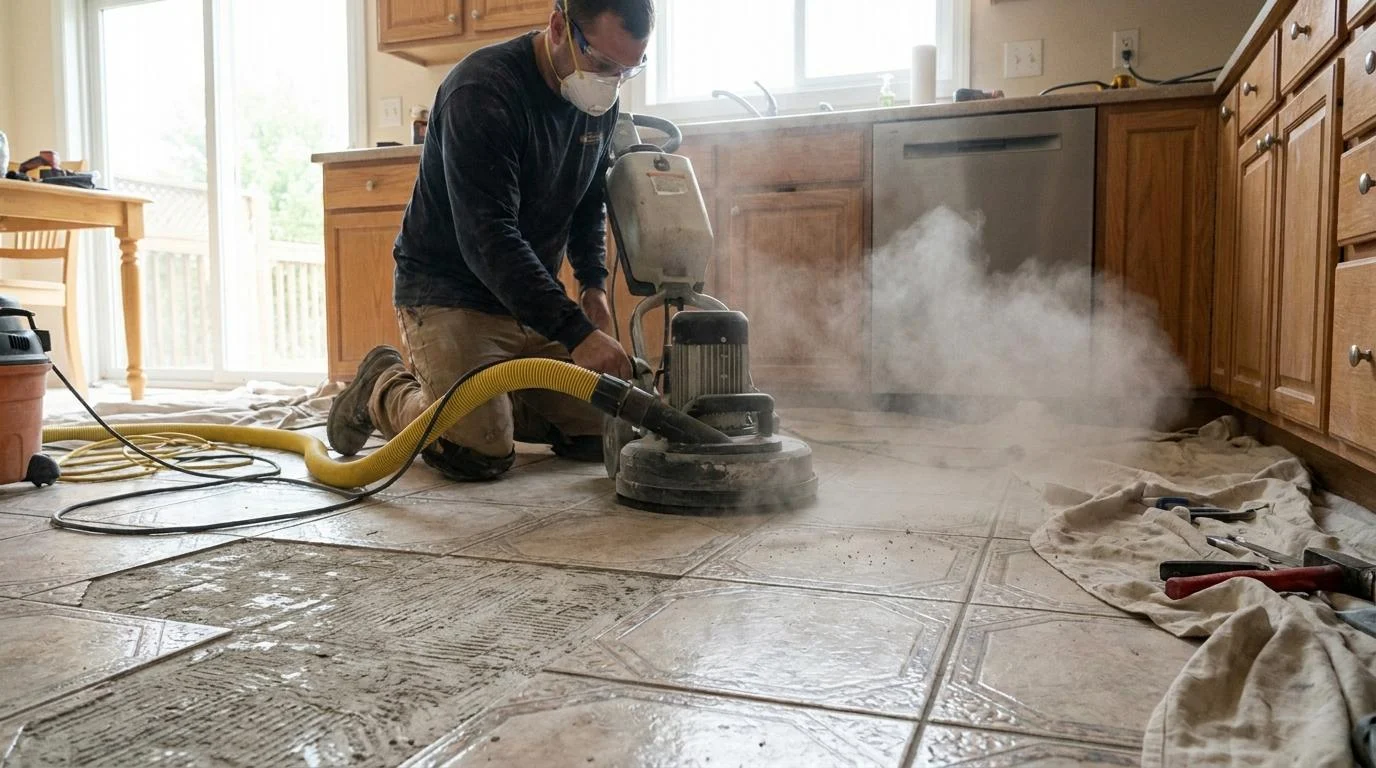
Proper surface preparation is the foundation of a durable epoxy coating. It involves three critical steps that ensure lasting adhesion.
Grinding the Glaze
A diamond grinder removes the tile’s glazed surface layer and creates the rough profile epoxy needs to mechanically bond. Without this step, the coating sits on a slick surface and begins peeling within months.
Filling Grout Lines
The recessed lines between tiles create an uneven surface that shows through a thin epoxy coat. Filling them with a leveling compound or epoxy filler creates a smooth, continuous surface for the final coating.
Final Cleaning
After grinding and filling, the floor needs a thorough cleaning to remove dust, adhesive residue, and any contamination left behind. This full prep process adds a half-day to a full day over working with bare concrete, but skipping it is the most common reason coatings fail early, which is why proper surface preparation matters no matter what the substrate is.
When Tile Removal Is the Better Choice
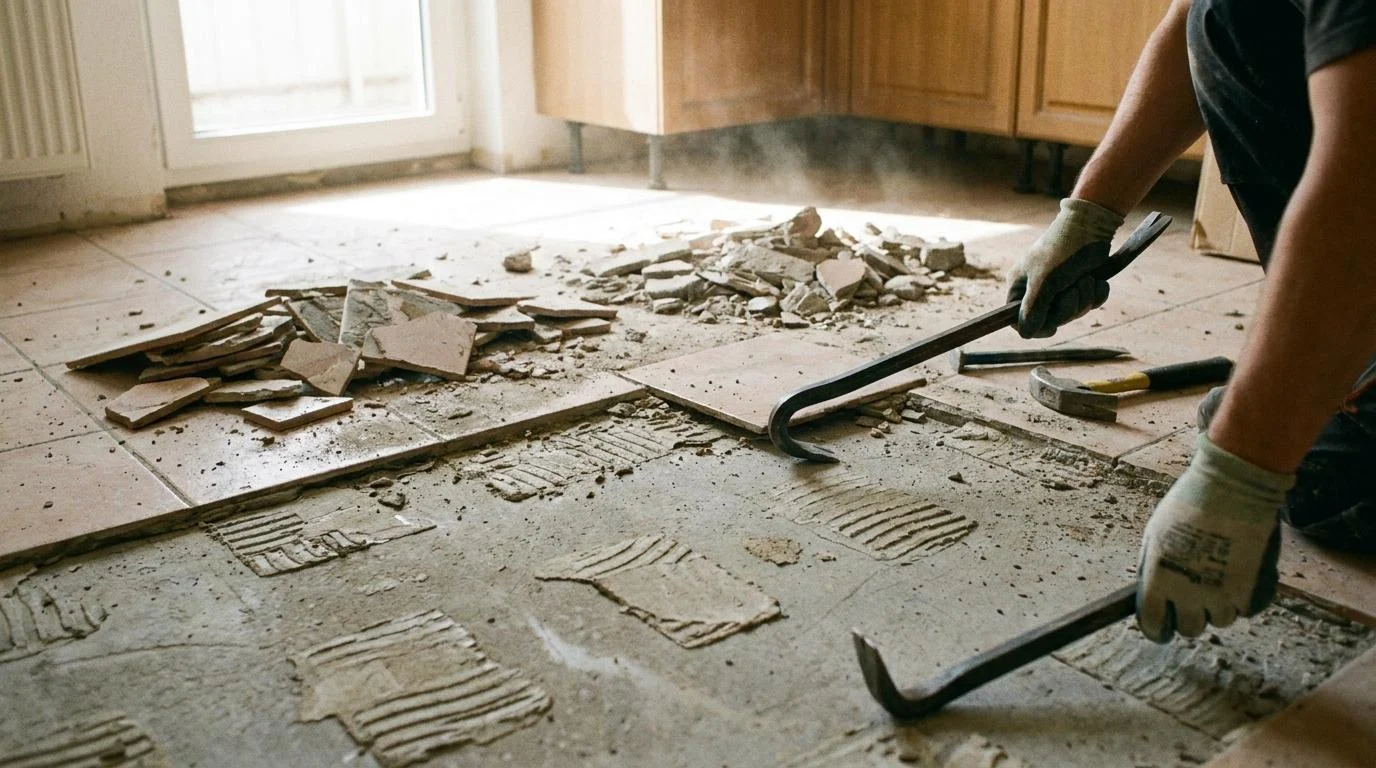
Tile removal is the better path when more than 10% to 15% of the tiles are loose, cracked, or hollow. Coating over an unstable substrate guarantees the epoxy will fail because the bond is only as strong as the weakest layer beneath it.
Moisture is another trigger for removal. In Cape Coral and across Southwest Florida, concrete slabs can push moisture vapor upward through the substrate. If moisture gets trapped between the tile and the epoxy, it causes bubbling and delamination that no surface prep can prevent. A calcium chloride moisture test identifies whether vapor transmission is a problem before any coating goes down.
Removal also makes sense when grout lines are deeply recessed or the tile layout creates significant height differences across the floor. Preparing a concrete floor for epoxy coating after tile removal gives the installer a clean, uniform surface to work with.
Frequently Asked Questions
How much does it cost to epoxy over tile?
Epoxying over tile costs $5 to $12 per square foot in Southwest Florida, which runs slightly higher than coating bare concrete because of the additional grinding and grout-filling prep work. A standard two-car garage with tile typically costs $2,500 to $6,000 for a full epoxy system including surface preparation, primer, base coat, and topcoat. The tile condition and how much leveling the grout lines need are the biggest cost variables.
Will epoxy over tile crack or peel?
Epoxy over tile is unlikely to crack or peel when the tile is firmly bonded, properly ground, and the grout lines are filled before coating. Failures happen when the tile beneath the coating is loose or when moisture vapor pushes up from the slab and breaks the bond from underneath. Epoxy Floors N More tests every tile floor for adhesion and moisture before recommending a coating approach.
Can you put epoxy over bathroom or kitchen floor tile?
You can apply epoxy over bathroom or kitchen floor tile as long as the tile is ceramic or porcelain, firmly attached, and free of major cracks. Bathrooms require extra attention to moisture because standing water and high humidity can compromise the epoxy bond if the tile-to-slab interface isn’t sealed properly. Adding anti-slip aggregate to the topcoat is essential in wet areas like bathrooms and kitchens.
Talk to a Coating Specialist About Your Tile Floor

Coating over tile saves demolition time and cost when the substrate is sound. Removing tile first gives the installer a clean concrete surface and eliminates the risk of hidden adhesion or moisture problems beneath the old floor.
Contact Epoxy Floors N More at (239) 339-7238 or to find out which approach works for your space.
Written by
Timothy Gonzalez
Epoxy Floors N More shares practical guidance based on floor coating work across Southwest Florida.