Concrete sealing in Fort Myers and Southwest Florida costs $1 to $3 per square foot. That range covers professional application on driveways, patios, and garage floors, with most residential projects landing between $250 and $1,700, depending on surface size and sealer type. Epoxy Floors N More seals driveways, patios, and garage floors throughout Fort Myers, Lee, and Collier counties, matching the sealer to each surface and to Southwest Florida’s climate.
Unsealed concrete absorbs moisture and UV damage that accelerates cracking in Florida’s subtropical climate. The right sealer stops that cycle before repair bills stack up. Budget acrylics, mid-range penetrating sealers, and high-performance polyurethanes land at three different price points, and square footage multiplies the gap from there.
What Affects Concrete Sealing Cost in Southwest Florida?

Three factors drive most of the price variation in a concrete sealing project: surface area, concrete condition, and sealer type.
Surface area is the biggest multiplier. A 200-square-foot patio might cost $250 to $600 to seal, while a full driveway at 500 to 800 square feet pushes the total to $575 to $1,700 or more.
Concrete condition matters because cracks, stains, oil contamination, and old sealer residue all require prep work before a new sealer can bond. Diamond grinding or chemical stripping adds $0.50 to $1.50 per square foot to the project. A driveway in poor shape costs significantly more than one that’s clean and structurally sound.
Sealer Types and Their Price Ranges
Acrylic Sealers
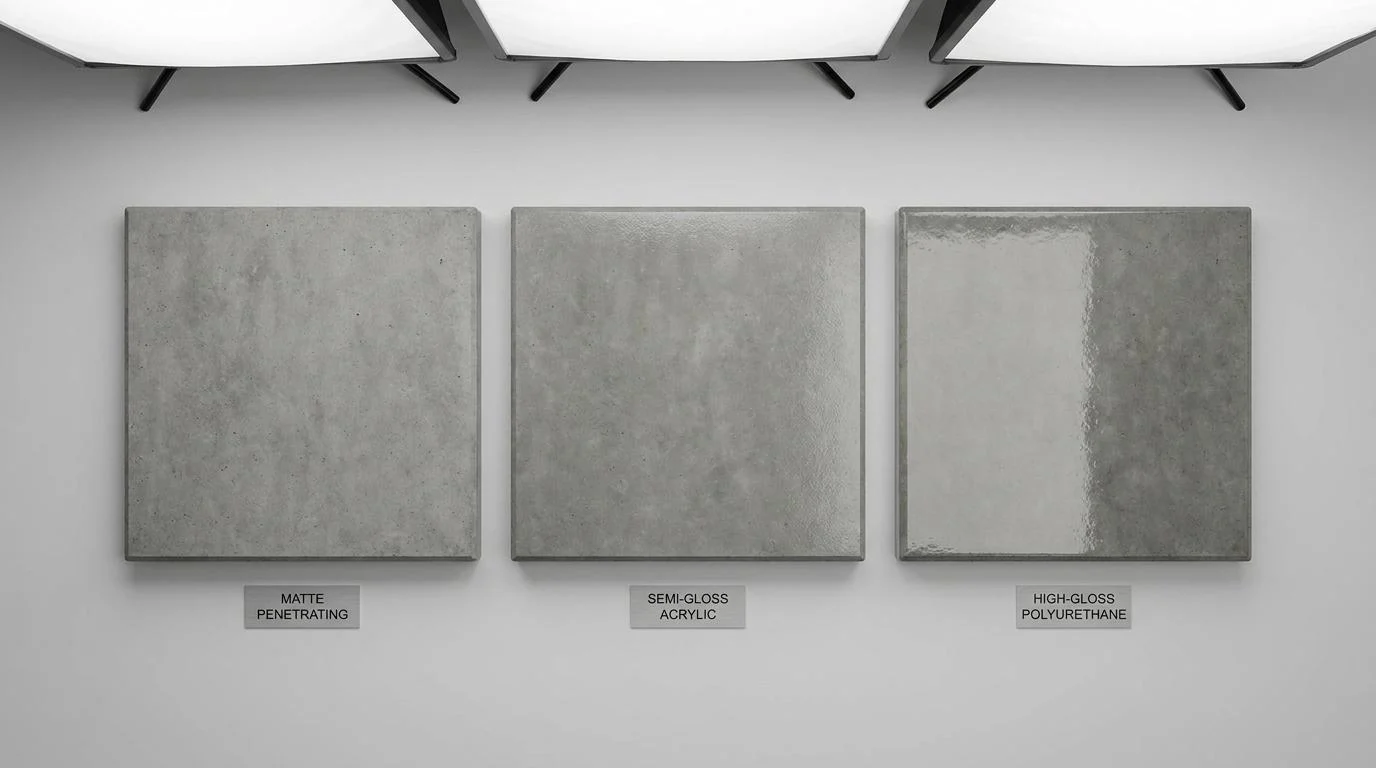
Acrylic sealers are the most common choice for residential driveways and patios in Southwest Florida. They cost $1 to $2 per square foot installed and create a thin protective film that repels water and resists UV fading. The tradeoff is longevity: acrylics typically last two to three years before reapplication is needed.
Penetrating Sealers
Penetrating sealers absorb into the concrete rather than forming a surface film. They cost $1.50 to $2.50 per square foot and protect against moisture intrusion without changing the concrete’s natural appearance. They’re a strong choice for pool decks and patios where a natural look matters more than a glossy finish.
Polyurethane and Epoxy Sealers
Polyurethane and epoxy sealers run $2 to $3 per square foot or more. They form the thickest protective barrier and hold up best against chemical exposure, heavy traffic, and humidity. These topical sealers cross-link into a dense polymer film as they cure, which is how concrete sealers protect against moisture and UV—and why they last five to ten years versus one to three for a thin acrylic.
When to Reseal and What It Costs Long Term

Resealing costs less than the initial application because the surface prep is lighter. Expect $0.50 to $1.50 per square foot for resealing work on concrete that has been properly maintained.
Timing depends on the sealer type and how much abuse the surface takes. Acrylic sealers on a sun-exposed driveway in Naples or Fort Myers typically need recoating every two to three years. Penetrating sealers last five to ten years. Polyurethane and epoxy sealers can go five to ten years between applications.
The math matters over time. A driveway sealed with acrylic at $1.50 per square foot needs five recoats over a decade, while a polyurethane sealer at $2.50 per square foot may need just one. Properly preparing the concrete before sealing determines how well every future recoat bonds and performs.
Frequently Asked Questions
Is concrete sealing worth the cost for a Florida driveway?
Concrete sealing is worth the cost for Florida driveways because it prevents the moisture absorption, UV fading, and surface erosion that cause cracks and spalling in unsealed slabs within three to five years. The sealer creates a protective barrier that blocks water, road chemicals, and salt air from penetrating the concrete. A $500 to $1,200 sealing job can prevent $3,000 to $8,000 in driveway repair or replacement costs down the line.
How long does concrete sealer take to dry in Southwest Florida?
Concrete sealer typically dries enough for foot traffic in 4 to 12 hours in Southwest Florida, with full cure taking 24 to 72 hours for most sealer types. High humidity and temperatures above 90 degrees can slow drying because the sealer needs moderate airflow and consistent heat to cure properly. Epoxy Floors N More schedules sealing projects around weather windows to ensure proper cure conditions.
Can you seal concrete that has cracks or stains?
You can seal cracked or stained concrete, but the damage needs to be addressed before the sealer goes down. Hairline cracks up to one-eighth of an inch can be filled with a flexible concrete caulk that bonds beneath the sealer. Oil stains require thorough degreasing because sealer won’t adhere to contaminated concrete, and any residue left behind will trap beneath the sealer and show through the finish.
Get a Concrete Sealing Estimate for Your Property

Your final cost comes down to the sealer you choose, the shape your concrete is in, and how much surface you’re covering. Just know that the lowest bid can cost you more in the long run. A cheap acrylic might need recoating four or five times in the years a single polyurethane job would still be holding. Pick the sealer that fits your surface and Florida’s climate, and you pay once instead of over and over.
Contact Epoxy Floors N More at (239) 339-7238 to discuss the right sealer for your project.
Written by
Timothy Gonzalez
Epoxy Floors N More shares practical guidance based on floor coating work across Southwest Florida.