Concrete staining adds permanent color to floors using acid-based or water-based formulas. Acid stains chemically react with the slab for natural, variegated patterns, while water-based stains produce brighter, more uniform color. Which one belongs on your floor depends largely on where that floor is, and in Southwest Florida, that means weighing each against the region’s UV and humidity. It’s a call Epoxy Floors N More helps homeowners make on concrete staining projects across Fort Myers and Lee, Collier, Charlotte and Hendry counties.
Acid and water-based stains look and behave differently on concrete. Florida’s UV and humidity narrow which type holds up best outdoors. From color permanence to chemical reaction timing, the comparison below spells out which method earns its place on your floor.
How Acid Staining Changes Concrete Color
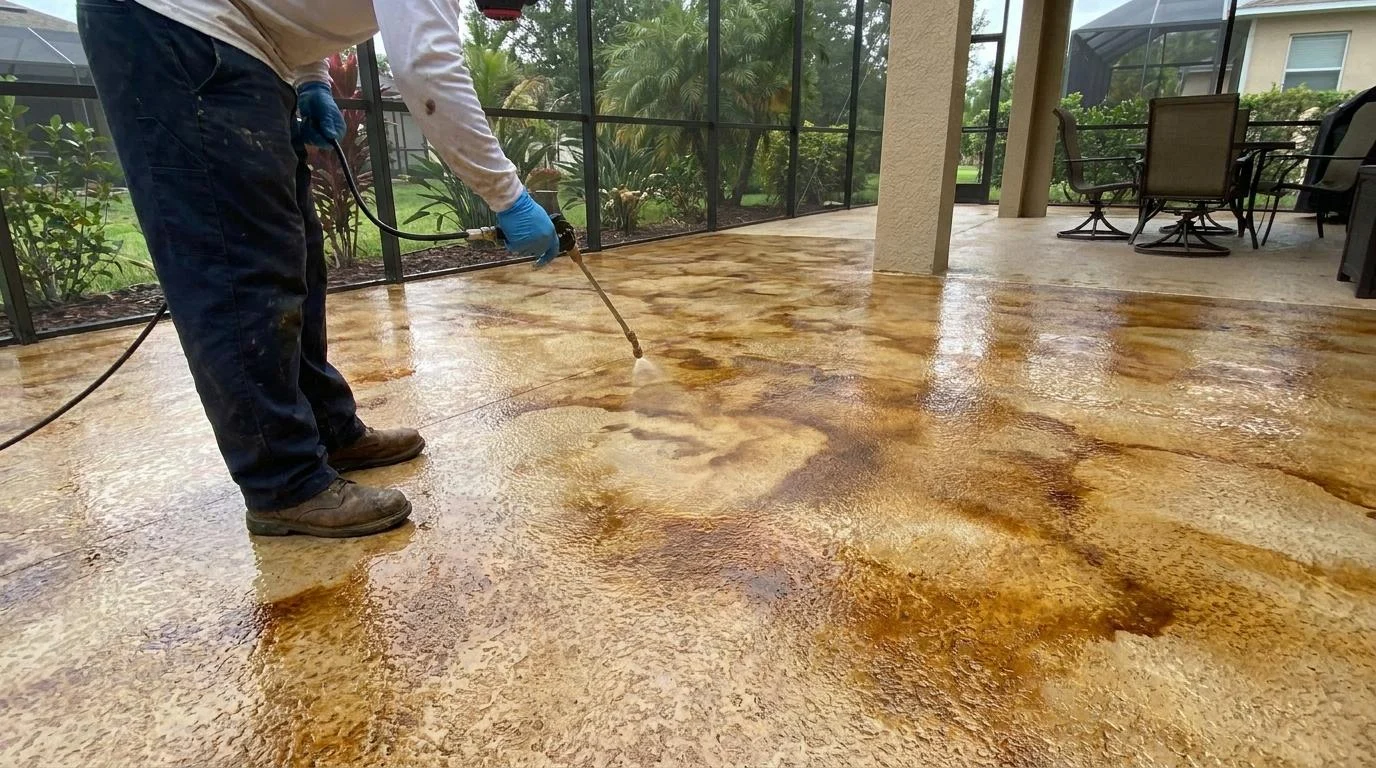
Acid stains contain metallic salts dissolved in a mild hydrochloric acid solution. When the stain hits concrete, the acid opens surface pores while the metallic salts react with the lime inside the slab. This chemical reaction produces color that becomes part of the concrete rather than a coating sitting on top.
Color Range and Variation
The result is a variegated, natural look with tonal variation resembling weathered stone. No two acid-stained floors look identical because color shifts with the concrete’s age, mineral content, and moisture level at the time of application. The palette stays within earth tones: tans, browns, terracottas, and blue-greens. Layering multiple stain passes can expand the range, but the final color will always lean warm and organic.
Installation Cost
Acid staining runs $2 to $6 per square foot for single-color work in Southwest Florida. That price overlaps with exterior paint, but the difference between concrete stain and paint is significant in Florida because embedded stain color typically outlasts paint by a decade or more on exposed surfaces.
How Water-Based Stains Work Differently
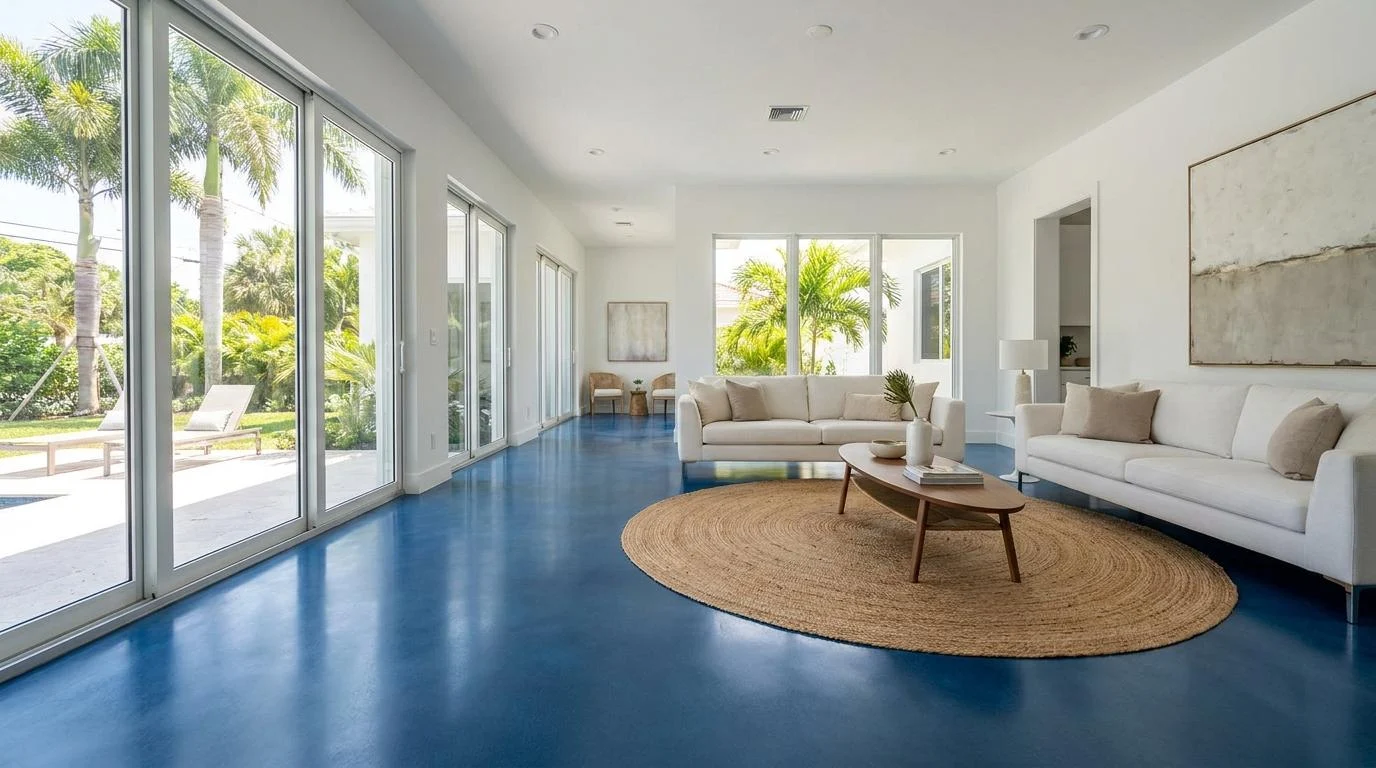
Water-based concrete stains use acrylic polymers or synthetic pigments carried in a water solution. Instead of reacting chemically with the slab, the pigment bonds to the concrete’s surface through penetration and adhesion. The color sits in the top layer rather than forming through a chemical reaction.
The practical difference is control. Water-based stains offer a wider color range including blues, greens, reds, and custom blends that acid stains can’t produce. The finish is more predictable and consistent, which matters on newer concrete where acid stains sometimes produce weak or uneven results. Application is also faster because water-based formulas don’t require a neutralization step after drying.
Water-based stain materials start around $2 per square foot. Professional installation across Southwest Florida adds $3 to $8 per square foot depending on surface prep complexity and project size.
Cost, Durability, and Color Range Compared
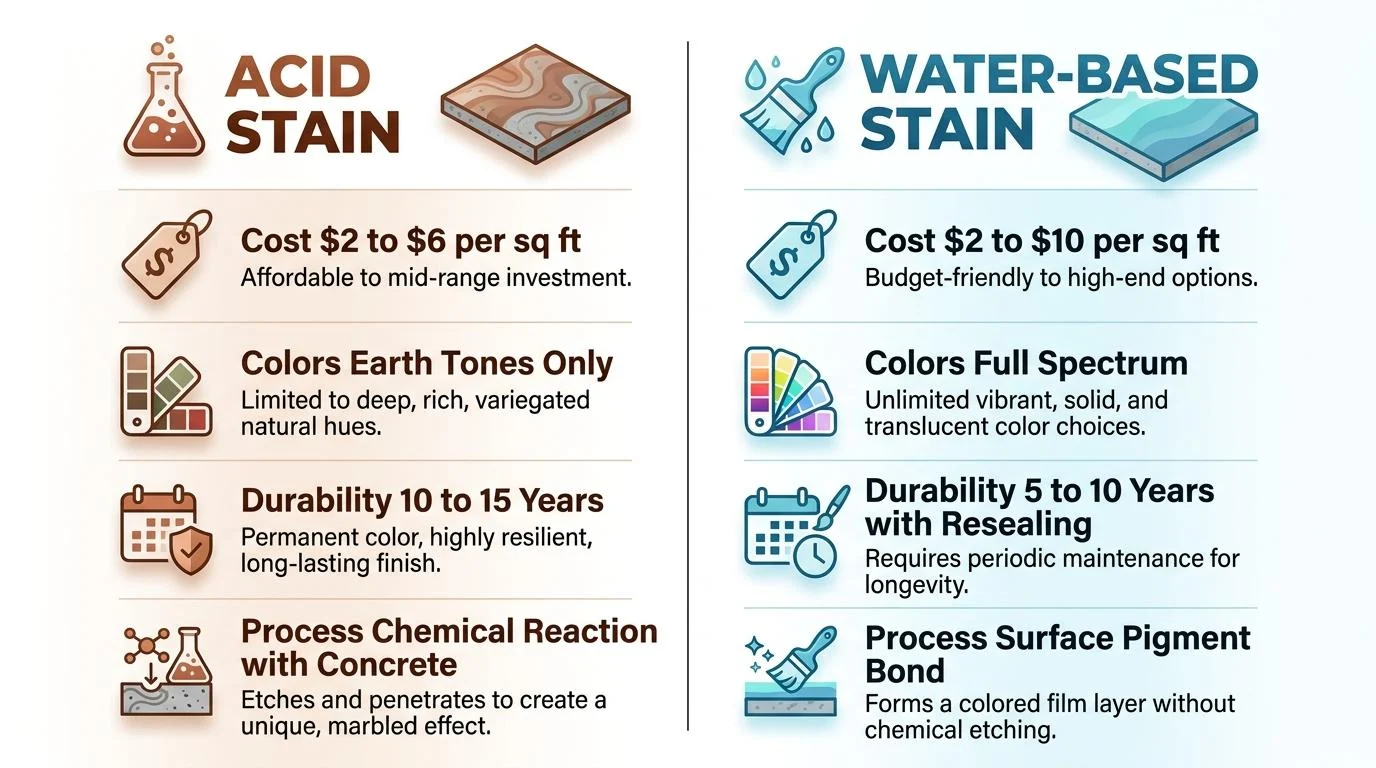
Acid staining costs $2 to $6 per square foot for basic residential work, while water-based applications range from $2 to $10 per square foot installed. The gap widens with design complexity because acid stains require extra labor for scoring, layering, and neutralization.
Durability by Location
Durability favors acid stains on outdoor surfaces. The embedded color does not peel or flake the way surface-applied finishes can, which is why patios and driveways exposed to Southwest Florida’s UV and rain tend to perform better with acid. Water-based stains are more vulnerable to fading under direct sun but hold up well on protected surfaces like screened lanais, covered porches, and garage floors in Cape Coral and across the region.
The decision usually comes down to two factors: colors and location. Earth tones on an exposed driveway favor acid. Vivid custom hues on protected interior floors favor water-based. The cost of Interior and exterior concrete staining range from $2 to $10 per square foot once labor and sealing are included.
Frequently Asked Questions
Does acid staining work on every type of concrete?
Acid staining produces the best results on untreated concrete that has never been sealed, painted, or previously coated. The metallic salts in the stain need direct contact with the lime in the slab to trigger the color-producing chemical reaction. Concrete that’s been sealed or coated blocks that reaction, which means the existing finish must be removed through diamond grinding before acid stain can penetrate.
How long does concrete staining last in Southwest Florida?
Acid-stained concrete remains visible for 10 to 15 years between protective sealer reapplications in Southwest Florida, and the embedded color itself become chemically bonded to the slab rather than sitting on top of it. Water-based stains typically need resealing every two to three years on surfaces exposed to direct sun and rain. Resealing costs far less than full reapplication because the base stain color stays intact beneath the protective sealer layer.
Can you stain concrete that has already been painted or sealed?
You can stain previously painted or sealed concrete only after the existing coating is fully removed through diamond grinding or chemical stripping. Paint and sealers create a barrier that prevents stain from penetrating or reacting with the concrete beneath. Skipping that removal step results in blotchy, uneven color or complete adhesion failure within the first season. Epoxy Floors N More checks surface condition during every project assessment to determine the right prep approach.
Pick the Staining Method That Fits Your Floor
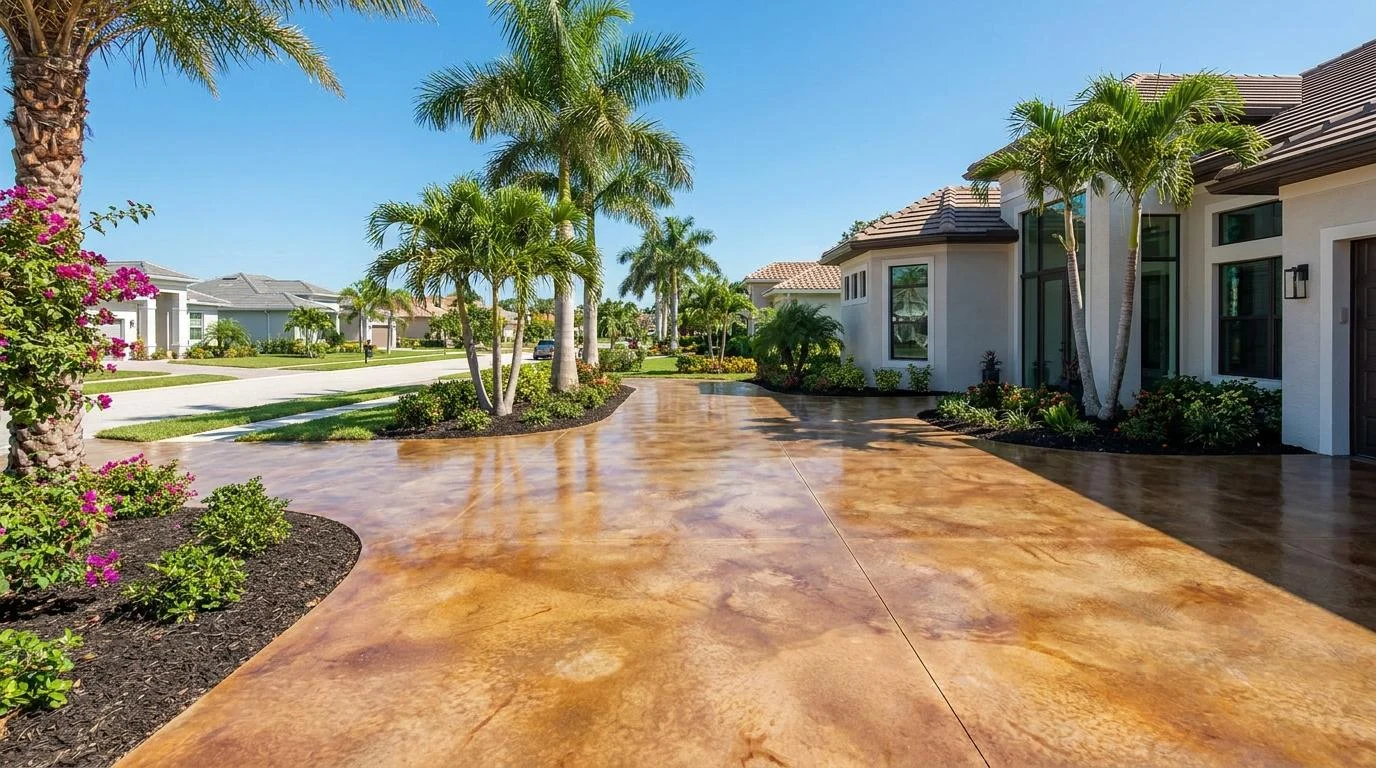
The right staining method depends on where your floor sits and what you want it to look like. Acid stains deliver permanent earth-toned color that holds up on exposed driveways and patios. Water-based stains offer the full color spectrum for interior floors, screened lanais, and garage slabs.
Contact Epoxy Floors N More at (239) 339-7238 to discuss which method fits your project.
Written by
Timothy Gonzalez
Epoxy Floors N More shares practical guidance based on floor coating work across Southwest Florida.