Staining concrete floors involves applying a semi-transparent colorant that penetrates the surface rather than sitting on top of it. The two main methods are acid-based stains, which react chemically with the concrete to produce natural earth tones, and water-based stains, which use pigment to deliver a broader color range without a chemical reaction.
After fifteen years of staining concrete across Southwest Florida, one pattern stands out clearly: the stain itself rarely causes problems, but the prep work before it determines everything. Epoxy Floors N More’s concrete staining team sees this on nearly every project in Fort Myers, Cape Coral, and Naples. Which method belongs on your floor depends on where it is and the look you’re after, and getting the prep right beforehand matters more than the stain you pick.
How Acid-Based Concrete Stains Work
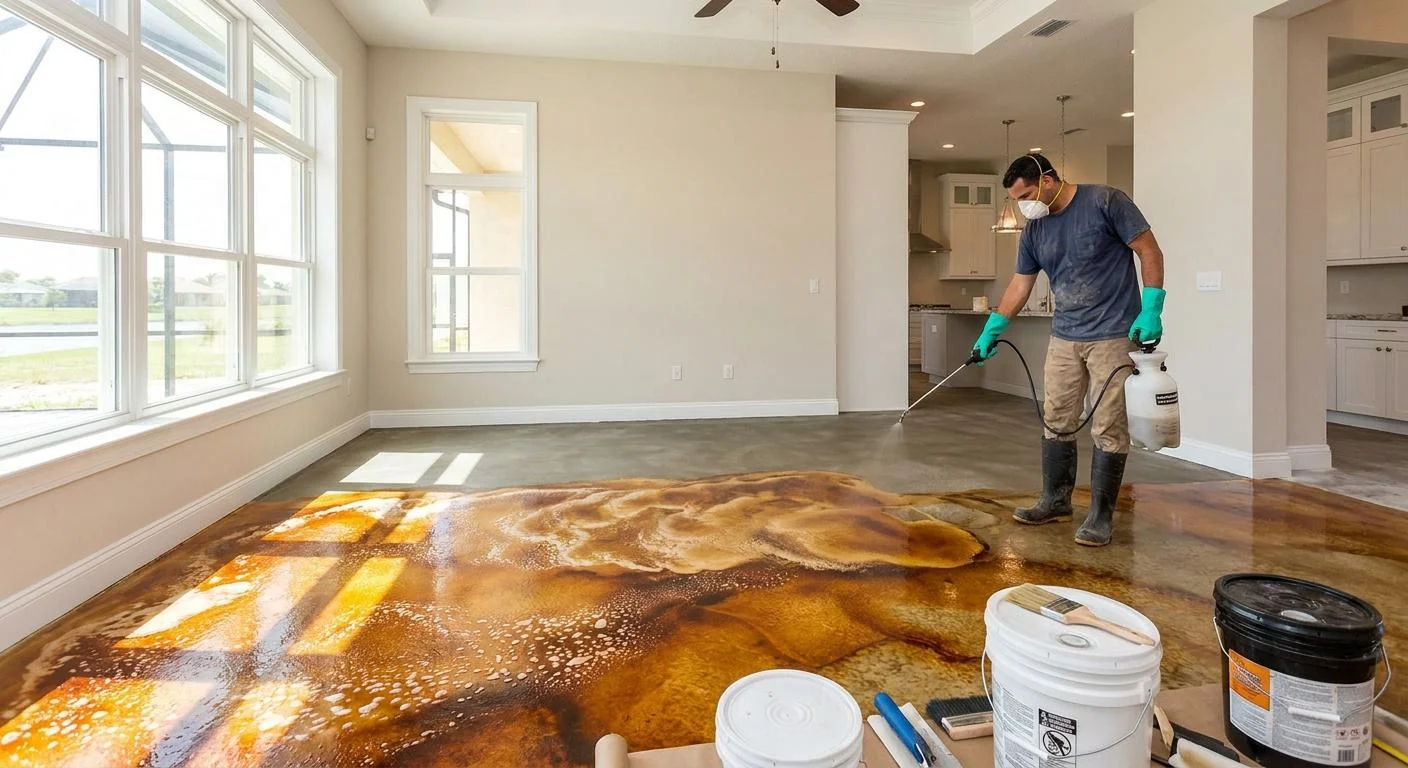
Acid-based stains contain metallic salts dissolved in a hydrochloric acid solution. When applied to concrete, the acid opens the surface pores while the metallic salts react with the calcium hydroxide naturally present in the slab. This chemical reaction produces permanent color changes that become part of the concrete itself.
The results are variegated and translucent, creating natural patterns that mimic stone, marble, or aged leather. No two floors look identical because the reaction depends on the mineral content of each specific slab. In Southwest Florida, where concrete mix designs vary between builders and decades, this variability is especially pronounced.
What to Expect from Acid Stain Results
Acid stains produce a limited palette of earth tones: ambers, tans, browns, blue-greens, and terra cottas. The color you see on a sample chip will not match your floor exactly. Factors that shift the final result include:
- Concrete age and porosity
- Previous sealers, coatings, or adhesive residue on the surface
- Cement brand and aggregate composition in the original mix
- Ambient humidity during application and reaction time
Neutralizing the acid after the reaction period is critical. Residual acid left on the surface will interfere with sealer adhesion and can cause white haze or flaking within months.
How Water-Based Concrete Stains Work
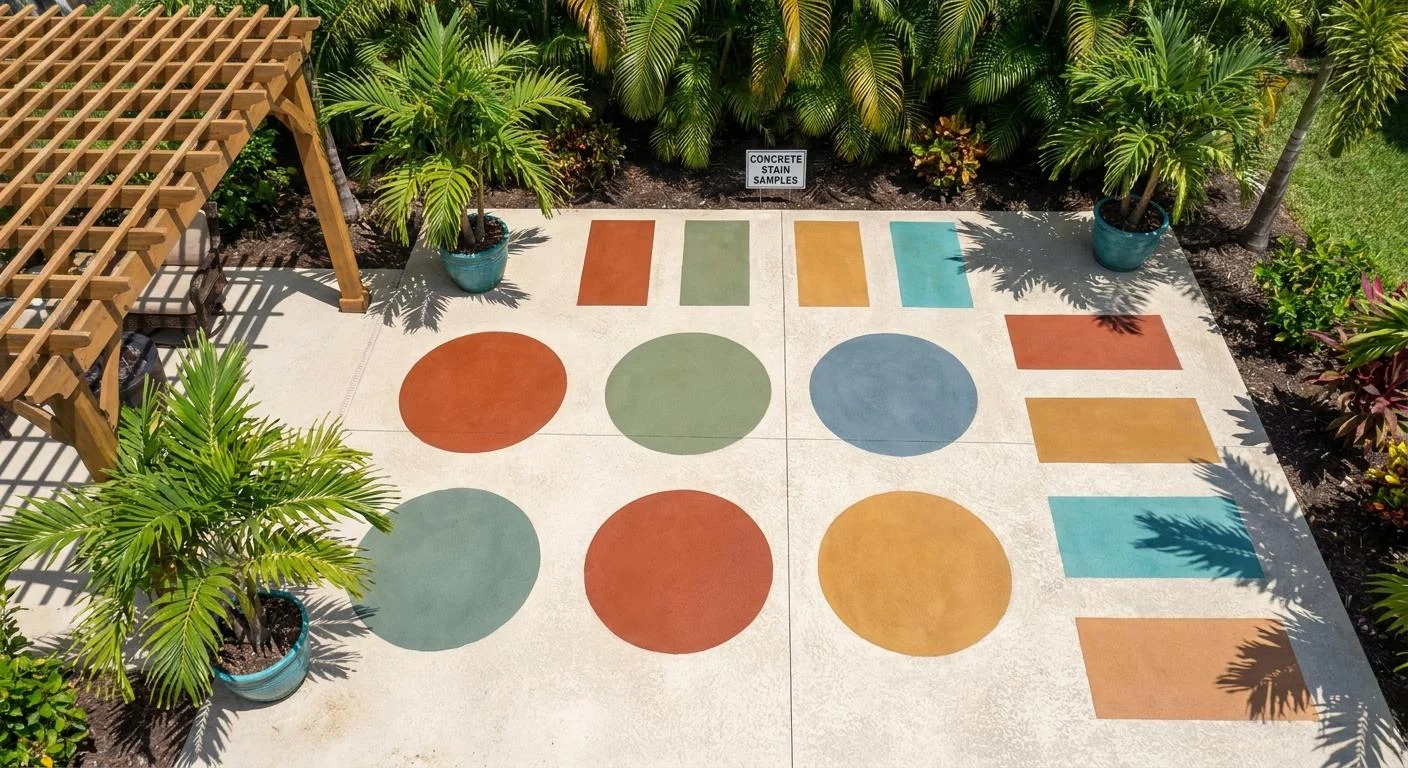
Water-based stains use acrylic polymers and pigments to deposit color into the concrete surface. They do not rely on a chemical reaction. Instead, the pigment particles penetrate the pores of the slab and bond as the carrier solution evaporates. The result is more uniform and predictable than acid staining.
The color range is significantly wider. Water-based stains are available in virtually any color, from subtle grays and warm whites to bold reds, blues, and greens. This makes them a strong fit for homeowners who want a specific color match for their patio, lanai, or interior floor.
Advantages Over Acid Stains
- Consistent, repeatable color across the entire surface
- No hazardous acid fumes or neutralization step required
- Compatible with a wider range of sealers and topcoats
- Can be layered or blended to create custom effects
- Lower VOC content, making them suitable for occupied interiors
Water-based stains show wear differently. Because the color sits closer to the surface compared to the deep chemical bond of acid stains, high-traffic areas may need a durable sealer or periodic reapplication to maintain appearance over time.
Choosing the Right Stain Method for Southwest Florida Concrete
Southwest Florida’s climate adds specific variables to the stain selection process. High humidity slows drying and curing times for both stain types. UV exposure on outdoor surfaces like patios, pool decks, and driveways accelerates color fading if the wrong sealer is applied over the stain.
When to Choose Acid-Based Stains
Acid stains work best on interior concrete floors where the natural, mottled look fits the design intent. Garage floors, basement slabs, and entryways with minimal direct sun exposure hold acid-stained color well when properly sealed. The permanent chemical bond resists wear even without a topcoat in low-traffic areas.
When to Choose Water-Based Stains
Water-based stains are the better choice for outdoor surfaces exposed to Florida’s UV and rain cycles. Their compatibility with UV-stable sealers helps maintain color integrity on patios, walkways, and pool decks throughout the year. The difference in durability between stain versus paint widens further on outdoor surfaces where paint fails within two to three seasons.
Surface Preparation Is the Same for Both
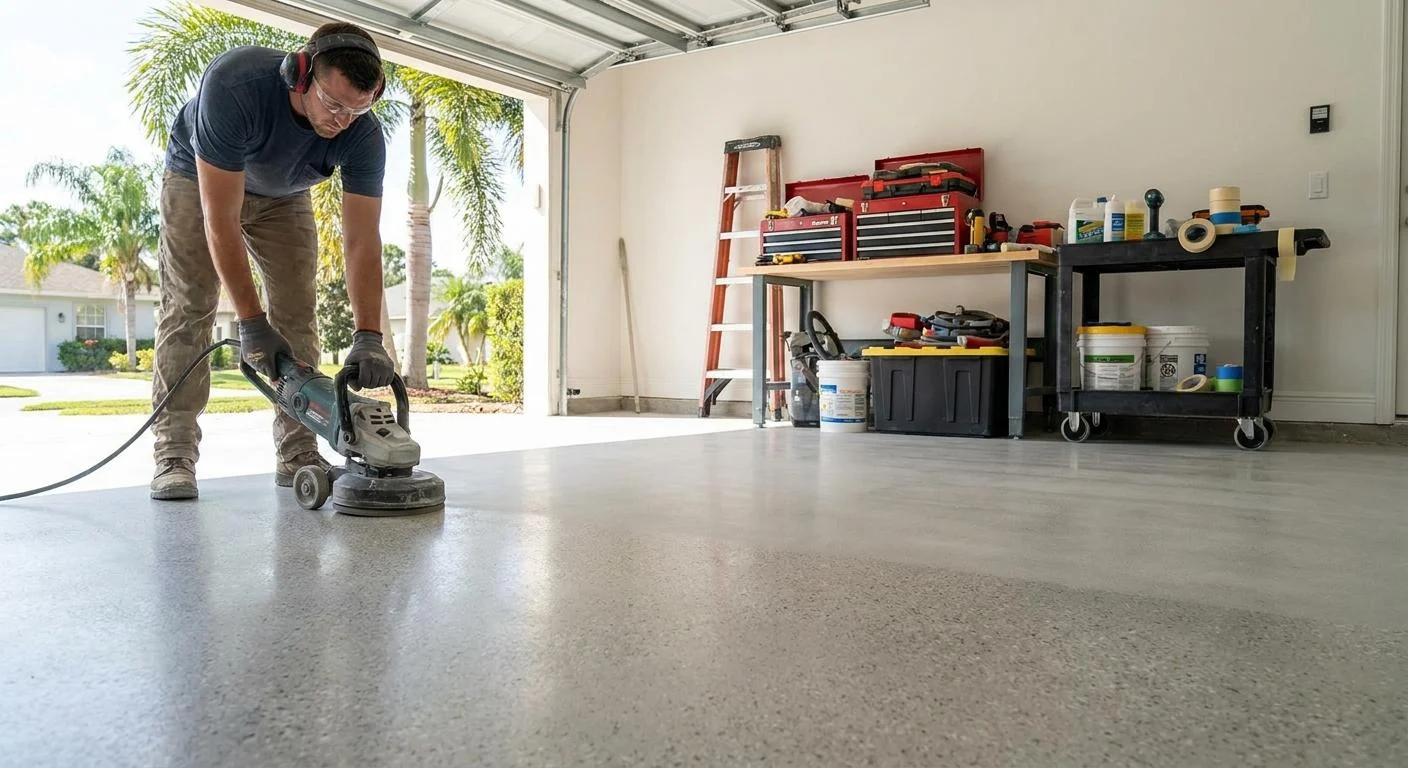
Regardless of stain type, proper preparation determines how well the color penetrates and how long it lasts. The concrete must be clean, free of sealers or coatings, and profiled to accept the stain. In Southwest Florida, moisture testing is especially important because high water tables and slab-on-grade construction can push moisture vapor through the concrete, causing stain failure or sealer delamination. This is a frequent issue in newer Lehigh Acres developments, where slab-on-grade homes sit on ground that stays damp throughout the rainy season.
Frequently Asked Questions
How long does concrete stain last in Florida?
Acid-based concrete stains create a permanent chemical bond designed to last the life of the slab when protected by a quality sealer. The sealer itself typically needs reapplication every two to five years depending on UV exposure and foot traffic. Water-based stains maintain their appearance for three to seven years on outdoor surfaces before requiring touch-up or resealing.
Can you stain old concrete that was previously sealed?
Previously sealed concrete must have the existing sealer fully removed before staining, because stain cannot penetrate through a sealed surface. Mechanical grinding or chemical stripping exposes the raw concrete pores needed for stain absorption. Skipping this step results in uneven color or complete stain rejection across the surface.
Is concrete staining cheaper than epoxy coating?
Concrete staining generally costs less per square foot than a full epoxy coating system because the material and labor requirements are lower. A typical residential staining project in Southwest Florida runs between $3 and $8 per square foot depending on stain type and surface condition. Epoxy coatings start higher but include built-in surface protection that stained floors require as a separate sealer application.
Match the Stain to Your Florida Floor

Acid and water-based stains each deliver distinct results, and matching the right method to your surface, location, and design goals is the first step toward a floor that holds its color for years. Whether you want the organic warmth of an acid-stained interior or the precise color control of a water-based finish on your patio, professional surface preparation is the difference between a stain that lasts and one that fades.
Epoxy Floors N More provides concrete staining services across Fort Myers, Naples, Cape Coral, and surrounding Southwest Florida communities. Request a free staining estimate or call (239) 339-7238 to discuss which stain method fits your project.
Written by
Timothy Gonzalez
Epoxy Floors N More shares practical guidance based on floor coating work across Southwest Florida.