
If you have noticed a dark, tire-shaped mark on your garage floor coating after parking your car, you may be wondering what it means. Hot-tire marking and pickup are concerns for garage floor coating owners around Fort Myers, Naples, and Port Charlotte. A mark under a tire does not automatically mean the coating has failed. Knowing the difference between a cosmetic mark and an actual adhesion problem helps you decide what, if anything, needs attention.
What Hot-Tire Pickup Actually Is (and What It Isn't)
The term hot-tire pickup is sometimes used broadly, but it helps to distinguish two different outcomes. Actual coating pickup occurs when heated tires stick to a floor coating and pull away material as the vehicle moves. Tire marking, on the other hand, can leave visible discoloration without removing the coating.
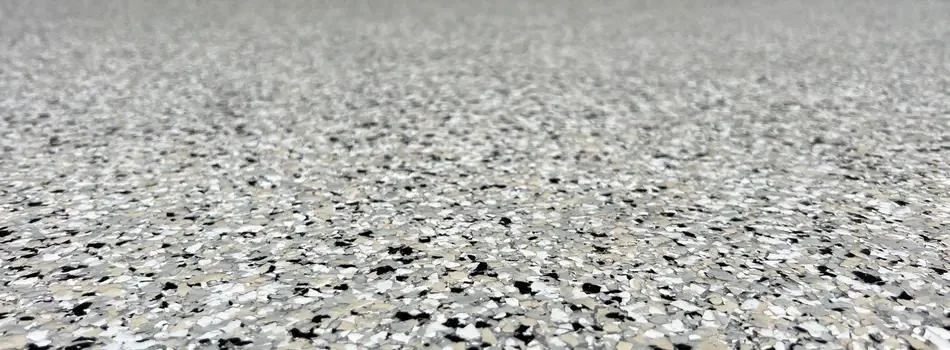
Technical research on concrete sealers and coatings explains that heated tire rubber can transfer plasticizers into a coated surface, leaving a dark, tire-shaped stain without actually removing any coating underneath (Euclid Chemical, Technical Bulletin CP-22).
Whether staining or coating removal occurs depends on factors such as coating chemistry, surface preparation, and curing. A mark that is only a stain is a very different situation from a spot where the coating itself is gone and bare concrete is showing. Before assuming the worst, look closely at whether the surface is still intact.
Why It Happens: Coating Choice and Installation Quality
Two factors tend to drive whether a garage floor shows tire marking or coating damage over time.
- Coating chemistry: Not all coatings respond to heated tires the same way. Industry guidance indicates that epoxy and urethane coatings generally resist tire discoloration better than lightly crosslinked acrylic cure-and-seal products (Euclid Chemical, CP-22). However, coating category alone is not a guarantee, so the full system matters more than a single product label.
- Surface preparation and slab condition: Contaminants on the concrete, inadequate surface preparation, and underlying slab moisture can all contribute to adhesion failure. Excess slab moisture can specifically lead to blistering or delamination over time (Sherwin-Williams, Concrete Evaluation and Core Testing). A mark located under where a tire regularly sits deserves a look at the full picture, rather than an assumption that heat alone caused it.
How Our Garage Floor Coating Process Is Built Around This
Our garage floor coating process for Fort Myers, Naples, and Port Charlotte homes starts with an on-site assessment and moisture test, followed by diamond grinding and crack and joint repair. From there, we apply a base coat, a flake broadcast layer, and a polyaspartic topcoat.
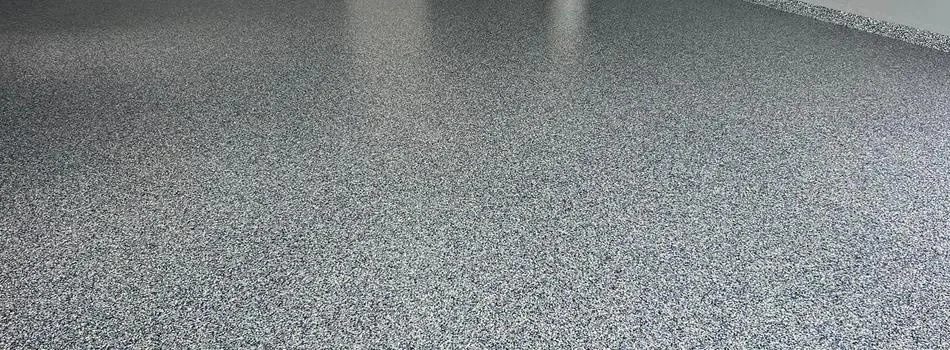
The moisture assessment and diamond grinding help address slab condition and adhesion, while the selected coating system is designed with vehicle traffic in mind. Proper preparation and appropriate materials help reduce the risk of coating failure, although no coating system can guarantee that tire marks will never occur.
Warranty terms and coverage are provided in the written quote or agreement for each project.
Cure Time and Parking: What to Know Before You Drive In
The coating systems we install for garages are selected with vehicle use in mind, and we allow the required cure window before a garage is opened up to parking. That distinction matters because a floor that is ready for foot traffic is not automatically ready for a parked vehicle.
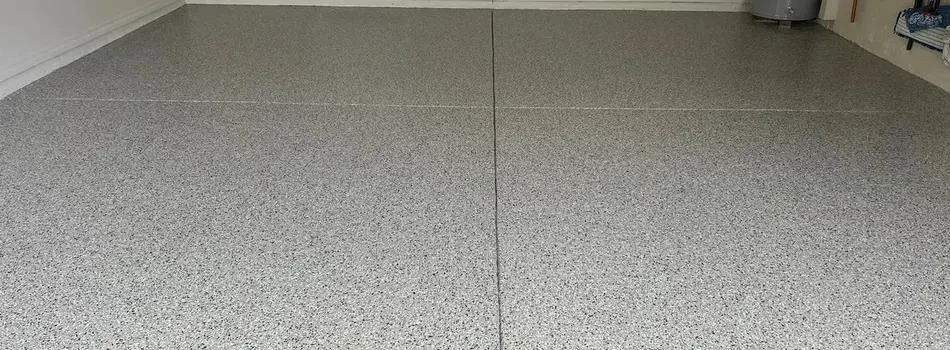
As one example of this general industry pattern, Rust-Oleum's EpoxyShield product guidance separates walking readiness, at one to two days, from driving readiness, at three days (Rust-Oleum, EpoxyShield Garage Floor Coating).
Timelines vary by product and installer, which is why we recommend following the specific instructions provided for your installed system rather than a generic rule of thumb.
Southwest Florida Conditions Worth Keeping in Mind
Temperature and humidity both play a role in how a resin floor coating cures. High humidity can contribute to bonding defects, and condensation can form on a slab when its surface temperature gets close to the dew point (Sherwin-Williams, Concrete Evaluation and Core Testing).
This is a general condition to be aware of in a Southwest Florida garage, not a sign that every local slab has a moisture problem. It is simply one more reason why an on-site assessment before installation is useful.
What to Do If You Notice a Mark
Cleaning a discoloration mark and repairing an area of missing coating are two different remedies, and the right one depends on what is actually happening at the surface. Before reaching out, it can help to note a few things:
- Does the mark wipe away or lighten with basic cleaning, or does it stay the same?
- Can you see or feel missing coating, or does the surface feel intact under the mark?
- Roughly how long ago was the coating installed, and was a vehicle parked there for an extended period?
Some surface marks can improve with appropriate cleaning, while deeper discoloration may remain within the coating. If the coating has actually lifted, the affected area may require repair or recoating according to the manufacturer's instructions.
Sharing those observations with your installer makes it easier to distinguish a cosmetic stain from an area that needs attention, rather than guessing from the color of the mark alone.
Get a Straightforward Assessment
If you are seeing tire marks on a garage floor coating, or you want a system installed with vehicle use in mind from the start, Epoxy Floors N More serves garages throughout Fort Myers, Naples, and Port Charlotte. Call (239) 339-7238 to talk through what you are seeing and get a clear assessment of your garage floor.
Written by
Timothy Gonzalez
Epoxy Floors N More shares practical guidance based on floor coating work across Southwest Florida.